
Driving in Lesvos: A First-Hand Guide to Roads, Routes and Car Rentals
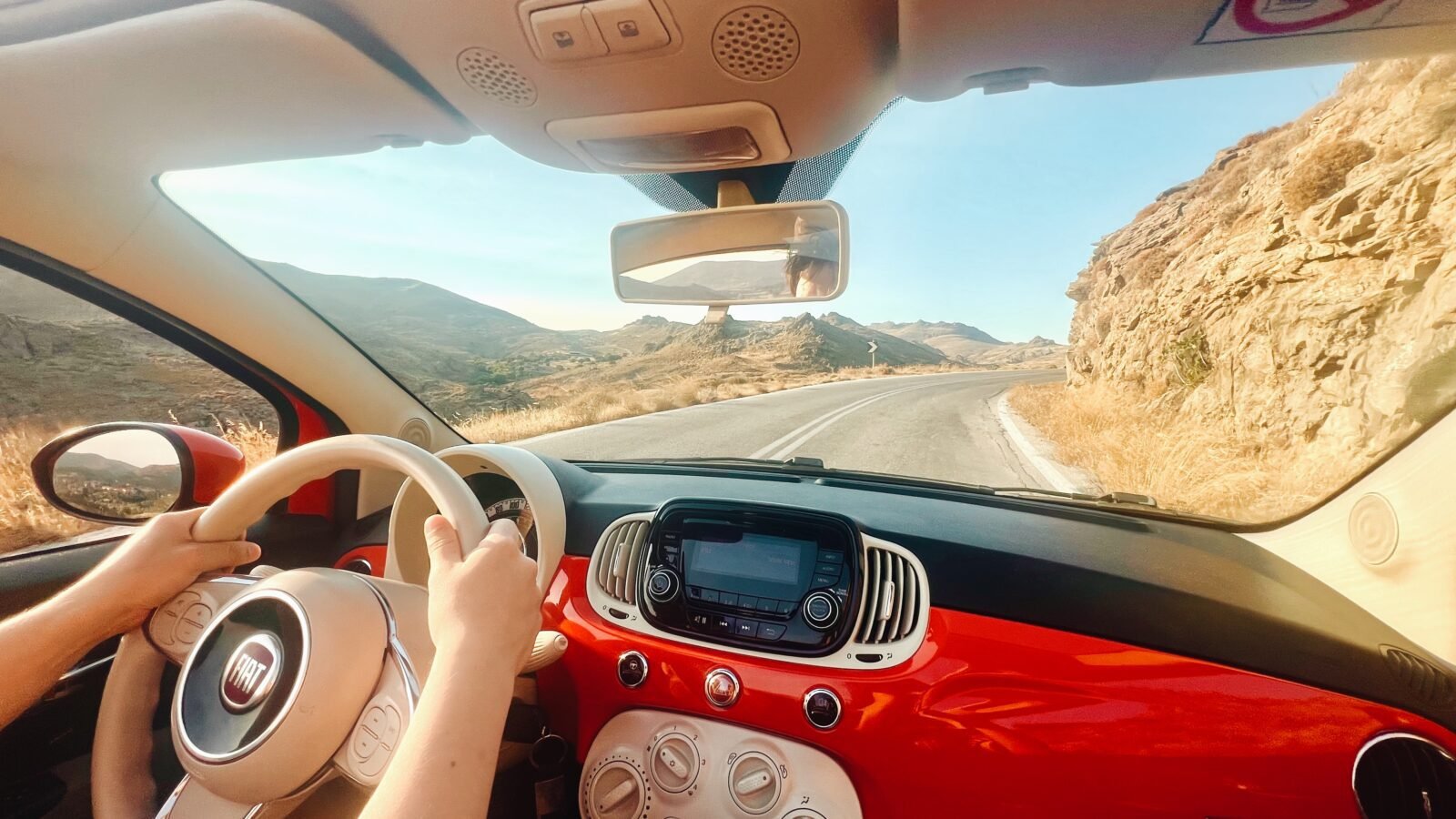
You’ve probably landed on this post because you, like me, are a little nervous about driving in Lesvos. Why else would you be googling it? We’ve all heard the stories about Greek drivers (no offense, Greeks). They’re known for overtaking on blind corners and speeding down roads that have seen better days. This guide is for anyone wondering what it’s actually like to drive on Lesvos. It’s for readers who might be a bit nervous, and who feel a little skeptical about driving abroad.
Quick guide
Difficulty: medium
Landscape: hills and coastal areas
Road conditions: main roads are good
driving side: right
Parking price: normally free
Do You Need a Car on Lesvos?
You might be wondering whether you should skip the whole hassle and get by without a car. I’m sorry to say that you can’t. A rental car is a must on Lesvos. That’s simply because of the distances involved, and because so little of the tourism infrastructure is built out. Taking taxis everywhere adds up fast. You’ll also likely miss out on many of the places a car lets you reach.
How Hard Is It Really to Drive on Lesvos?
Writing a guide about driving conditions is tricky. Traffic rules, weather, road quality and driving culture all vary so much from country to country. That means we all bring our own everyday experience into the mix. What feels uncomfortable behind the wheel differs from person to person. For a lot of people, the easiest kind of driving is on motorways and roads that cut straight through the landscape. It’s a ruler-straight drive from A to B. Others find it more challenging to drive in unfamiliar cities or busy traffic. Technically demanding mountain roads and difficult weather can be tough too. In a lot of ways, Lesvos sits right in the middle of that difficulty scale.
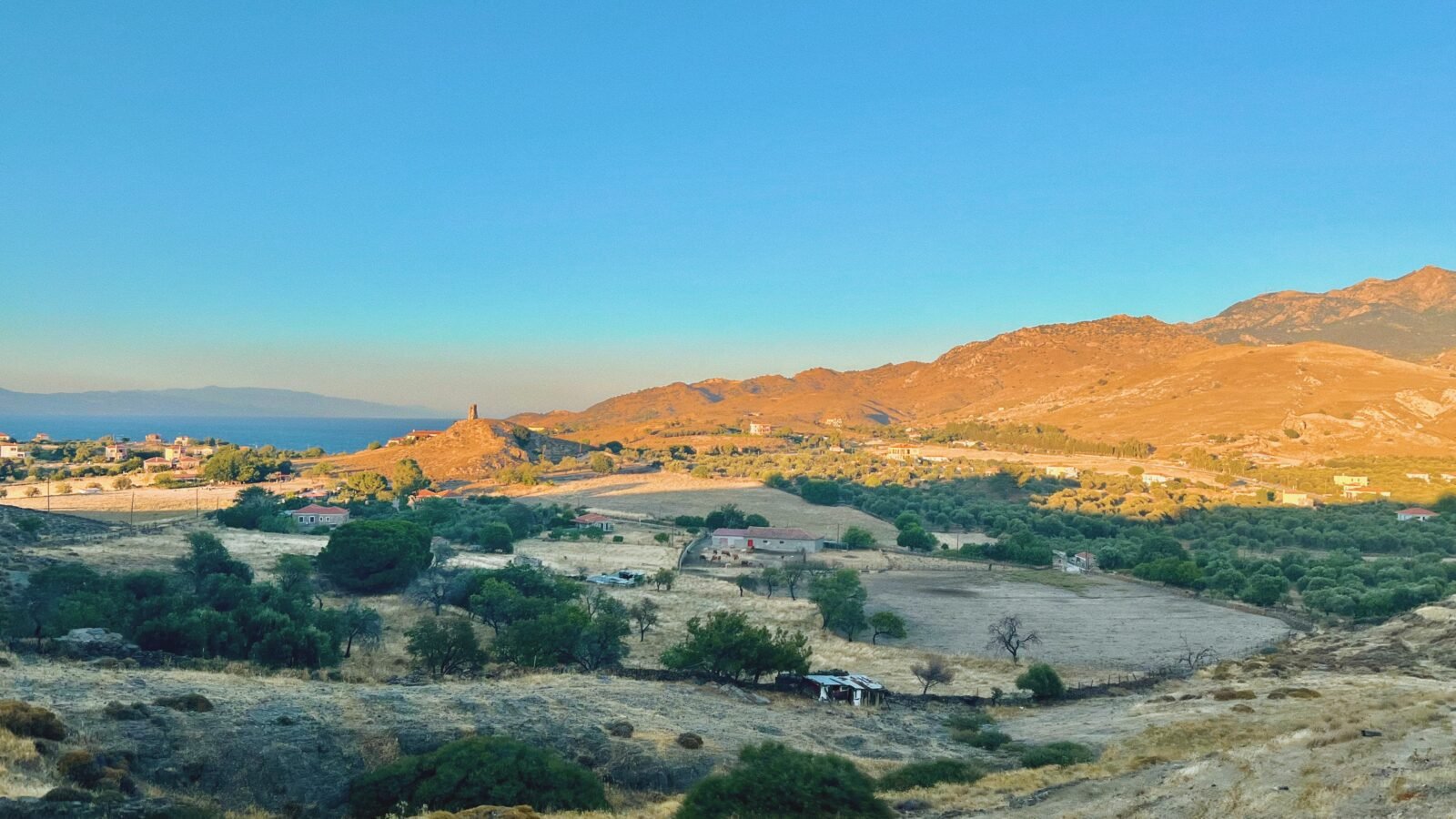
There’s hardly any traffic (phew), and the main roads are in good shape. The terrain is fairly hilly though, and once you’re forced onto the smaller roads, things get a bit more challenging. Even so, I’d argue Lesvos is manageable for most drivers who have at least some experience with varied roads and conditions.
A Norwegian’s Take on It
I’m from Norway myself, a country of mountains, fjords, a hilly landscape, and weather that’s hard on the roads. That means I’m well used to driving on rural roads and winding, unlit roads. Even so, I can still get nervous before a trip abroad, simply because I don’t know what to expect. What I find particularly unpleasant is drivers who tailgate, honk, and try to overtake in bad spots. We don’t get much of that in Norway. It wasn’t a big problem on Lesvos either, aside from one incident.
Distances and Terrain
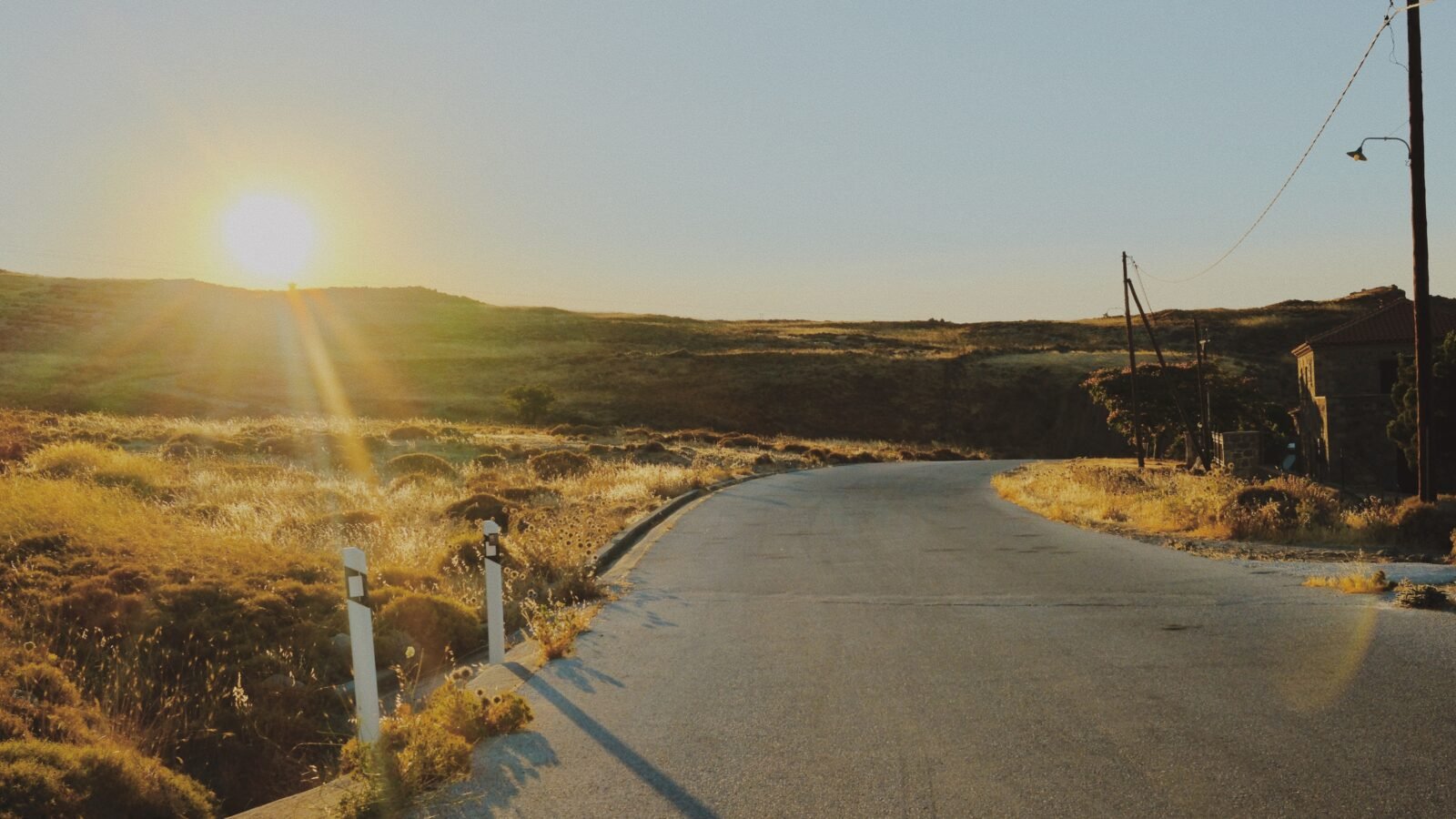
Lesvos is a fairly large island, Greece’s third largest in fact. You should expect some travel time if you’re planning to drive around it. The upside of driving here is exactly that: the island is big. The population and tourist numbers, though, are relatively small. Most of the island’s residents live in the capital, Mytilene.
Outside Mytilene, that naturally means fewer cars on the road. You can largely relax and drive at the speed limit without worrying about building up a queue behind you. The island’s volcanic origins give it hilly terrain. Expect plenty of climbing and descending, on roads that follow the landscape rather than prioritizing a straight-line drive. That said, you won’t find any seriously high mountains here, since the highest point is only 968 metres. The main roads are in surprisingly good condition and, in my opinion, pleasant to drive on. They’re mostly paved too, even a lot of the smaller roads you might expect to be gravel. No raised pulse here.
What the Roads Are Actually Like on Lesvos
To be honest, driving in Lesvos pleasantly surprised me right away. Before heading to Lesvos, I googled quite a bit about what driving there would be like. Given my experience from other Greek islands, I knew I wasn’t keen on being honked at. I also didn’t want to be overtaken in dangerous spots. Without leaning too hard into stereotypes, Greek drivers unfortunately have a bit of a reputation for their driving style. Road safety isn’t always their strong suit either. Pretty much every moped rider here goes without a helmet, which would be an unusual sight back home.
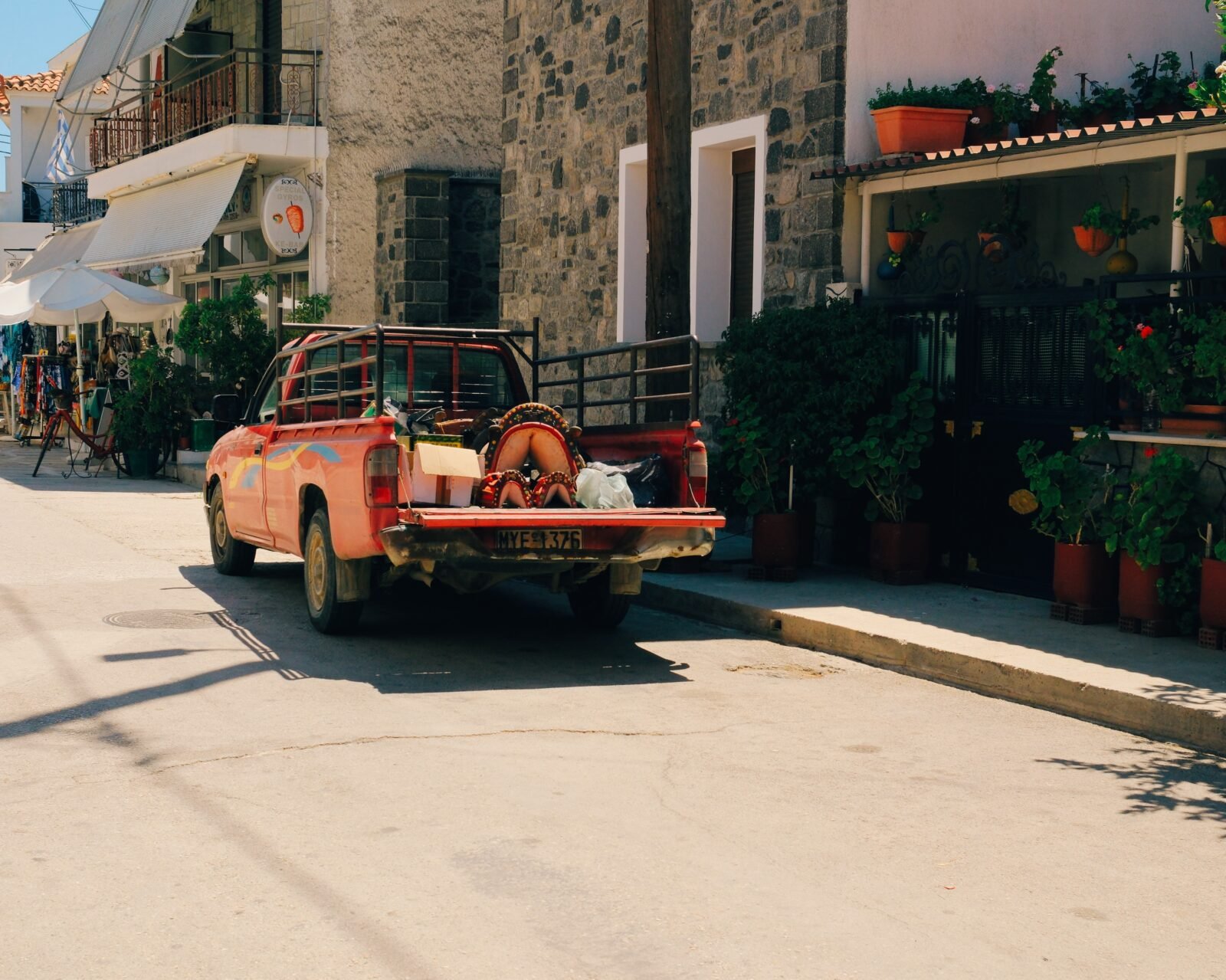
The road I found most uncomfortable was the one to Plomari. It winds quite a bit around rocks and small hills. It’s also a little too narrow when you meet a bus or another large vehicle, with poor visibility around the bends. Luckily there wasn’t much traffic, so you could usually drive at your own pace and feel comfortable. Some oncoming drivers cut the corners on the bends, which I’d call risky driving on their part. It’s not much fun when you’re the one coming around the other side.
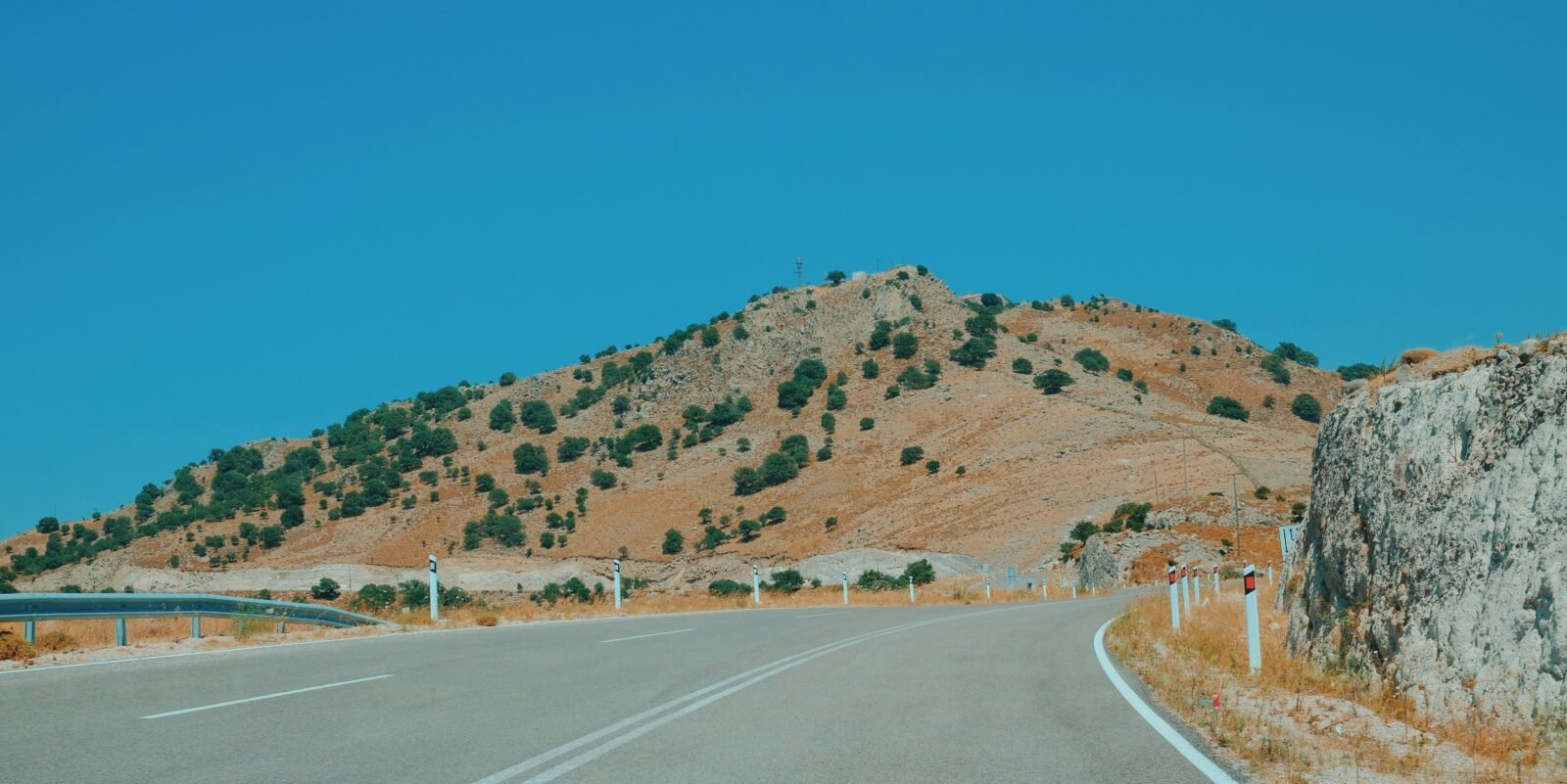
Driving to Sigri and the Petrified Forest is, on the other hand, very comfortable. The roads are good and wide, with a high speed limit the whole way. You should also take a stroll around the small village while there. Maybe eat some local fish for lunch as well.
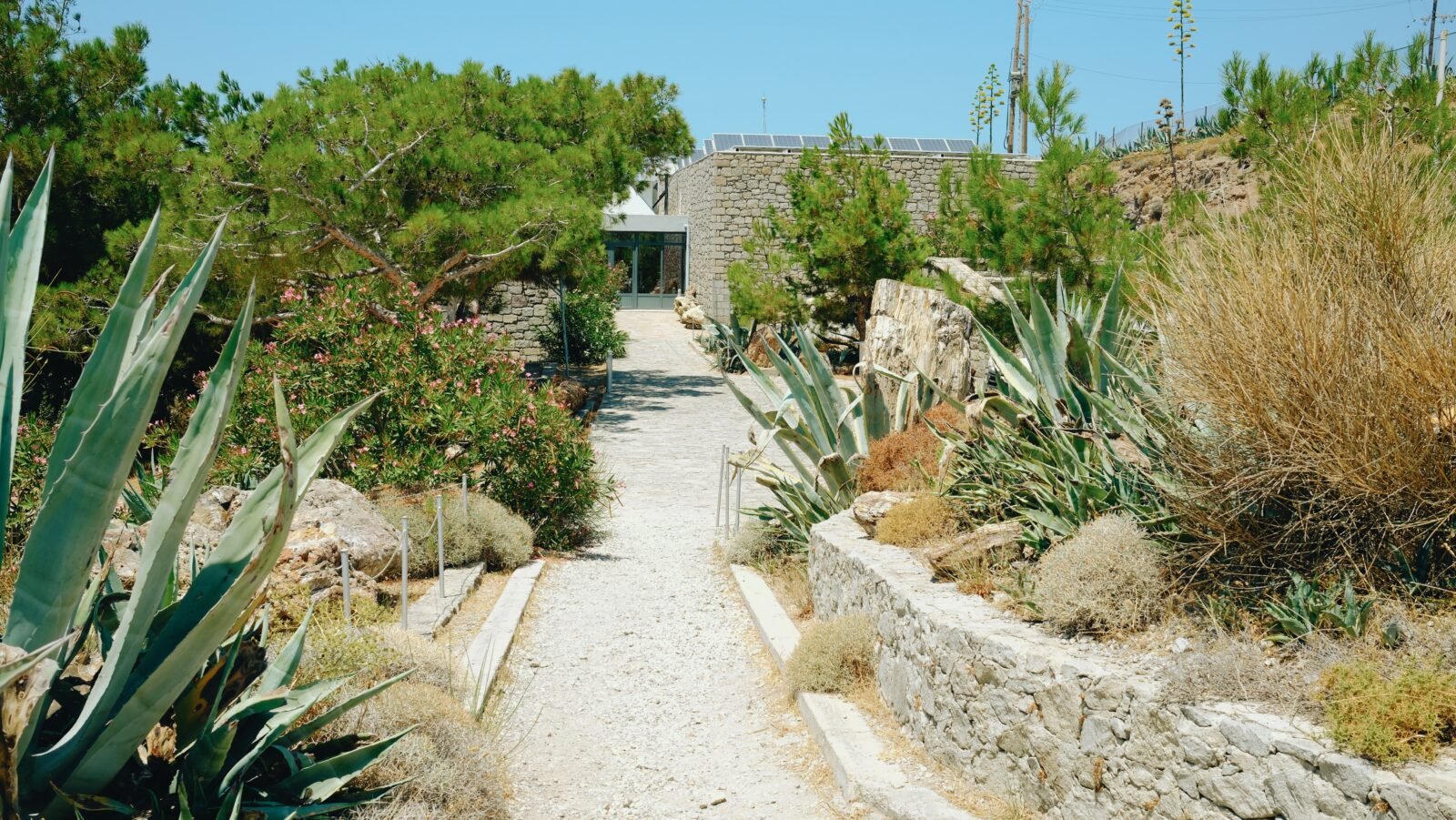
How to Choose Your Route
Google Maps works worse here than on the mainland, and noticeably worse than elsewhere in Europe. Choose the route with the fewest bends and the most time on main roads. Do this even if it shows a longer travel time. As a general rule, the coastal roads are rarely your best option. That’s because the main roads tend to run through the interior and out toward the island’s various edges.
If you’re using Google Maps, a good rule of thumb is to zoom out a little. Look at which roads are drawn with the thickest lines, then stick to those as much as possible. The smaller roads tend to be very winding, and can be narrow, worn, and generally lower quality. It’s mostly along these smaller roads that you’ll also spot the little roadside shrines. They mark where a serious accident once happened. Trust your gut and don’t blindly follow Google Maps. That’s really what I’m trying to say here.
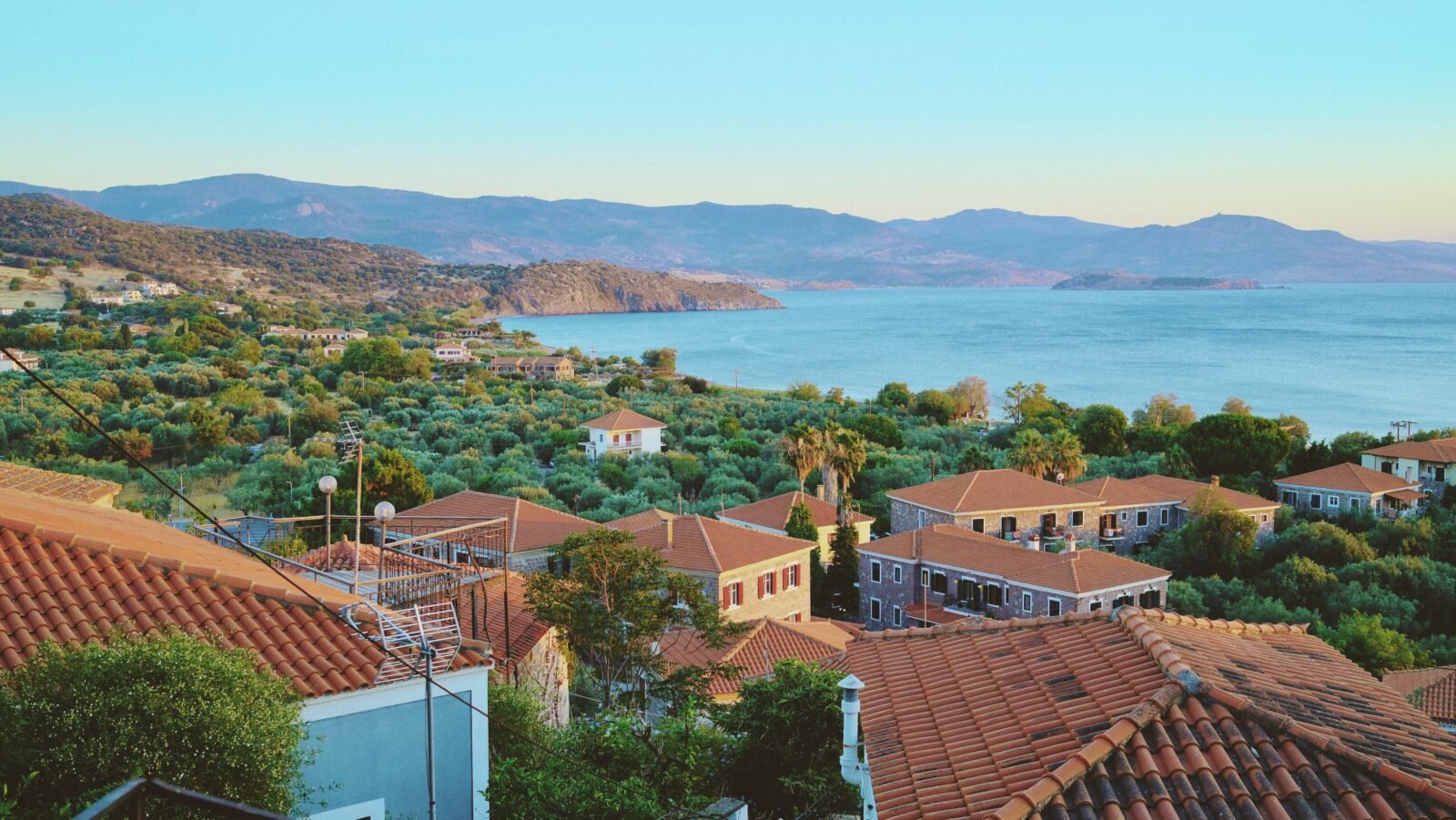
Google Maps tends to default to the fastest route. That isn’t actually always the best or fastest route on Lesvos, though. The mismatch happens because Maps likes to route you onto smaller roads that often have no posted speed limit. That can make them look faster on paper. In reality, these roads are usually in worse condition. You should budget extra time beyond whatever the app tells you.
Ask Locally When in Doubt
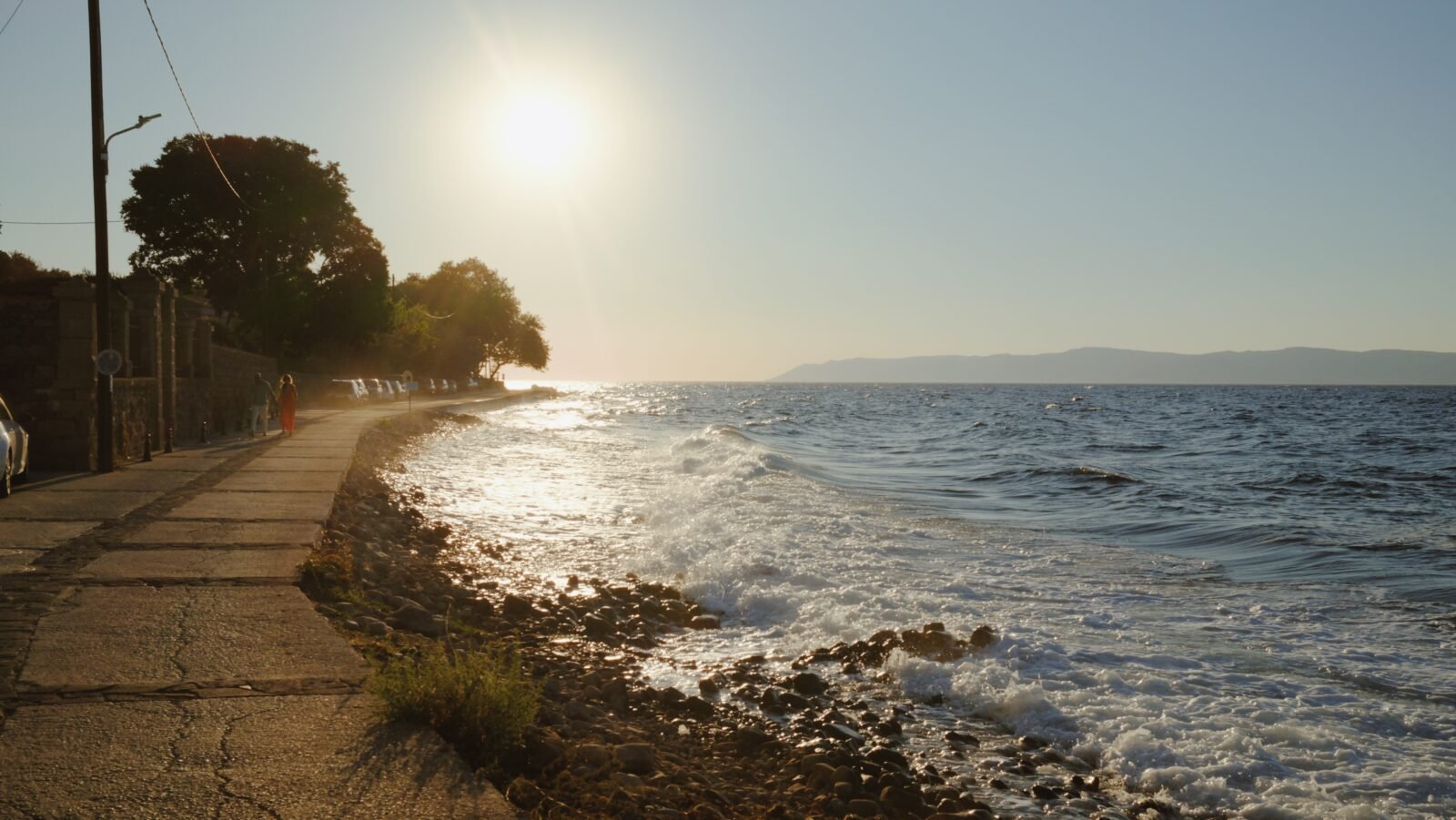
If you’re ever in doubt, you’ll get a long way just by asking the reception at your hotel for route advice. This is especially true if you’re heading to one of the smaller fishing villages. As a rule of thumb, the smaller and more remote the place, the worse the roads get. The road down into and back up from Skala Sikamineas, for example, is fairly steep and winding. It’s perfectly manageable, but you’ll want to use engine braking on the way down. Keep the revs up on the way back up too.
Parking in Lesvos
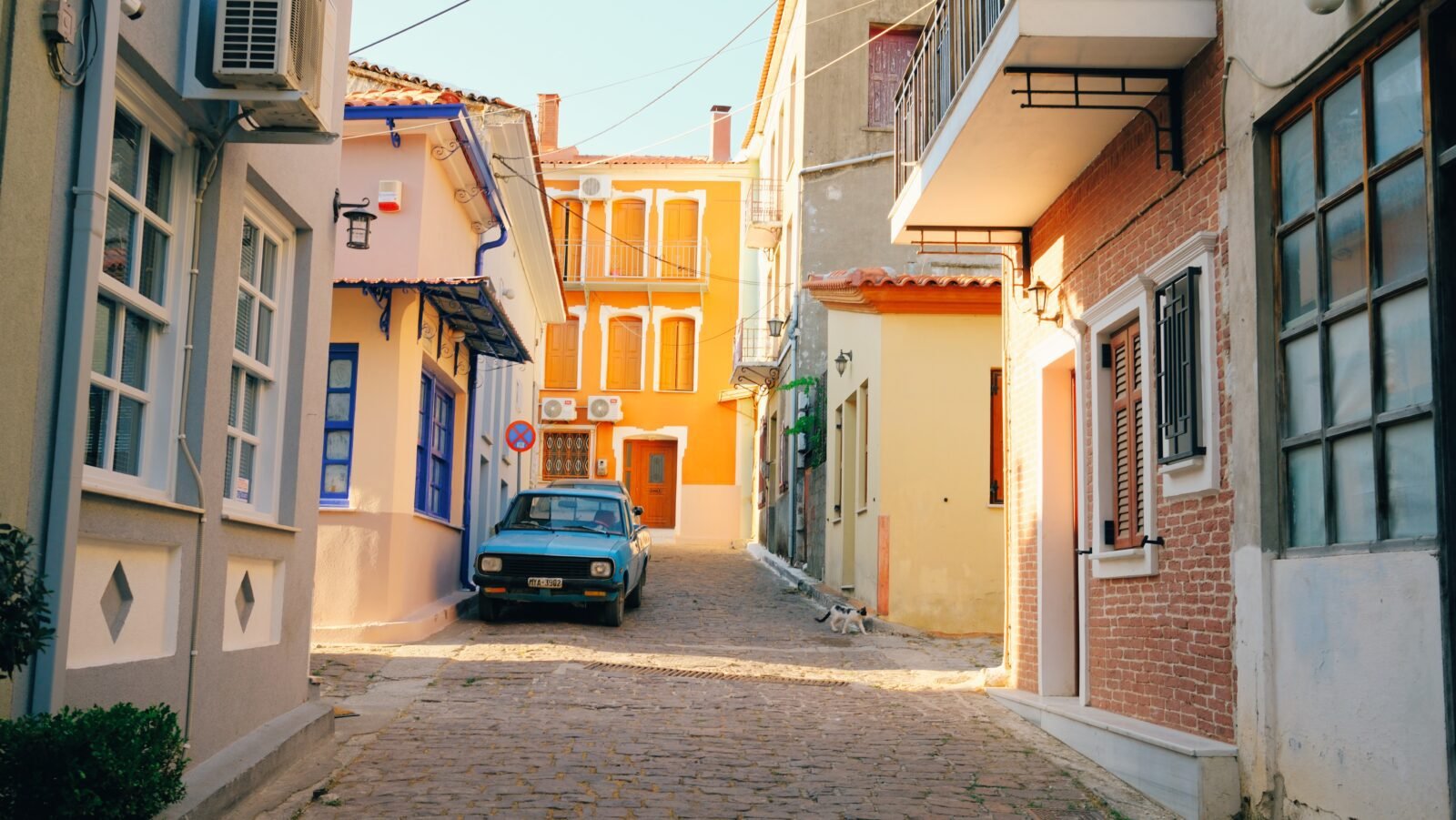
Parking is worth covering too, since for a lot of people that’s the real nightmare. Just the words “parallel parking” are enough to raise my pulse. Here on Lesvos, though, you’ll rarely need to squeeze into a tight spot. Most places have larger parking areas with plenty of room between cars. In the oldest towns, the streets simply weren’t built for cars, only for pedestrians, so it’s common to park at the edge of town, on the outskirts, or just outside the centre. That’s nothing to worry about, since these places tend to be small and you can easily walk the last stretch. Parking in public lots is mostly free. You can search for parking on Google, or zoom in on the satellite view in Google Maps and look for parking areas. In several places, parking is also marked with signs.
Car Rental Tips for Lesvos
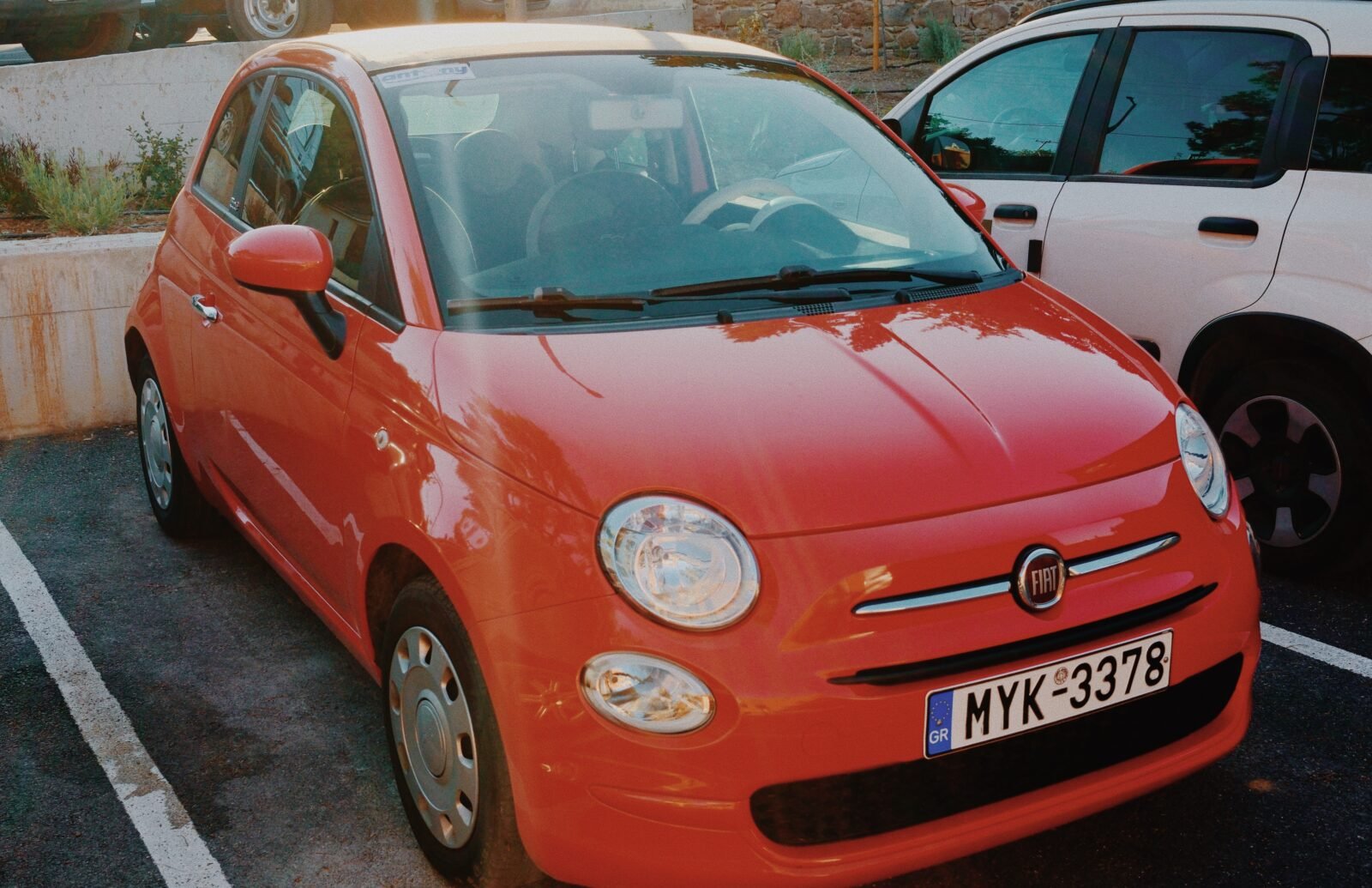
You can get hold of plenty of different rental car types, both manual and automatic. Petrol and diesel cars are the most common. A few of the bigger international rental companies have offices at the airport and in some of the towns. Still, they don’t have a particularly strong foothold on the island. Overall, a good chunk of the market is local operators, with solid reviews and fair terms.
We rented a Fiat convertible, and honestly, there’s a real charm to it. The landscape feels closer somehow, without a roof and windows getting in the way of the view. Just remember to put sunscreen on. It’s easy to forget the sun is blasting at UV10 when the wind is pleasantly blowing through your hair.
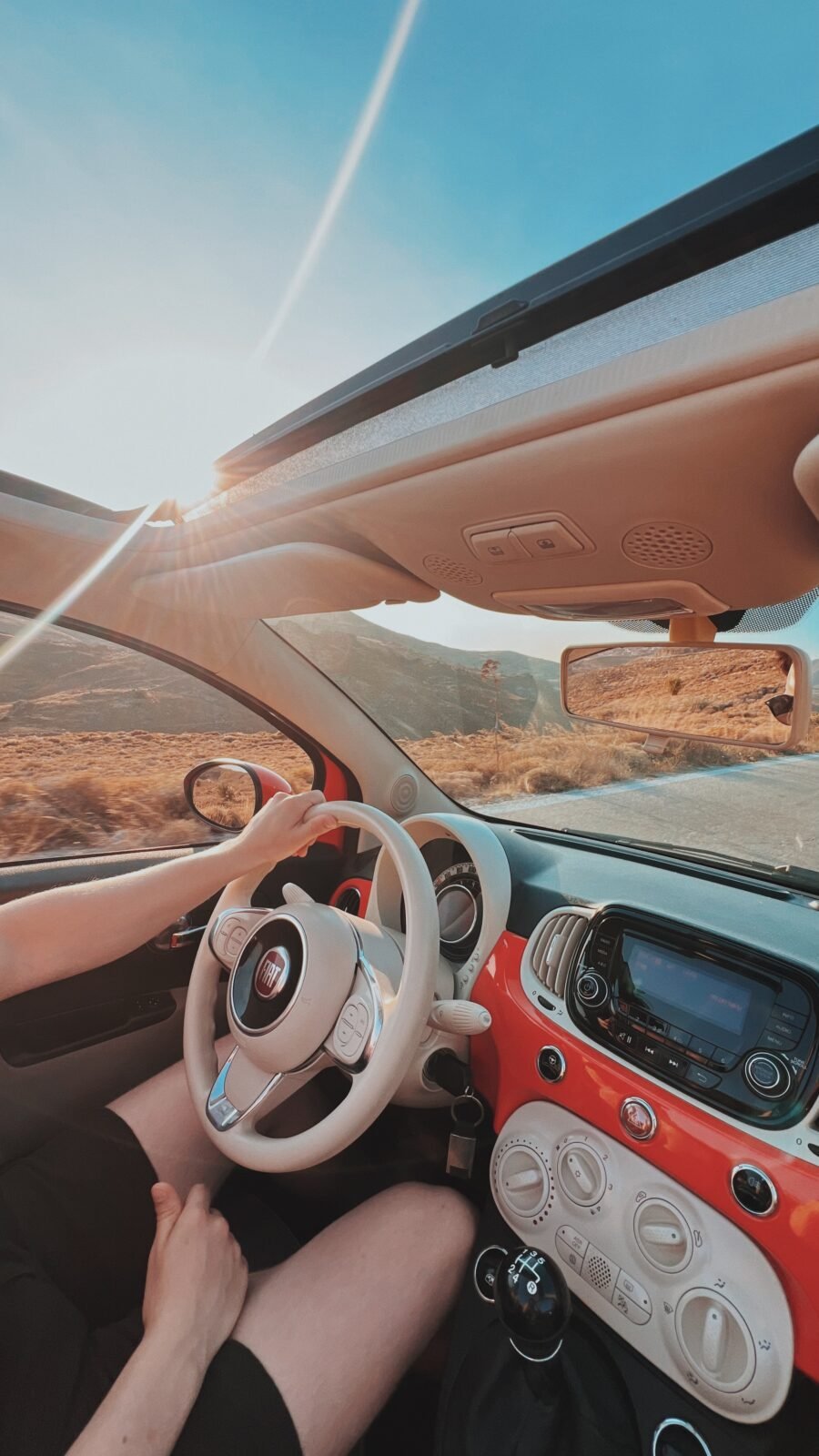
We got in touch with Antony Car Rental via WhatsApp and arranged the contract that way. The price was decent, and we were happy from start to finish, with quick replies whenever we sent a message.
Petrol Stations
Petrol stations on Lesvos are a little spread out. It’s worth planning a bit ahead rather than counting on finding one right when you need it. That said, we never actually ran into any trouble with this ourselves. At the station where we filled up, an attendant pumped the petrol for us and had a wireless card reader. We could just stay seated in the car the whole time.
One Last Reassuring Word
Driving in Lesvos turned out to be far easier than I’d feared. I went to Lesvos with a plan to have my partner do most of the driving. I still ended up behind the wheel for at least half the trip myself. All in all, it was a great experience and well worth it for exploring the island. Getting around without a rental car is genuinely difficult. On top of that, there’s something wonderful about being fully in control of your own schedule. Good luck, and have a great trip!
Complete Travel Guide to Lesvos, Greece
Your Complete Travel Guide to Lesvos, Greece Lesvos is one of the largest Greek islands, yet it feels surprisingly untouched, which is exactly why we…
Molyvos: Where to Eat and Drink

Unique Things to Do in Plomari, Lesvos: Ouzo Museum and Olive Oil Tasting
Charming Villages in Lesvos: 7 Must-Visit Towns
Charming Villages in Lesvos: 7 Must-Visit Towns Sunset over Skala Sikamineas harbour on Lesvos, Greece. These are some of the most charming villages in Lesvos,…