
Charming Villages in Lesvos: 7 Must-Visit Towns
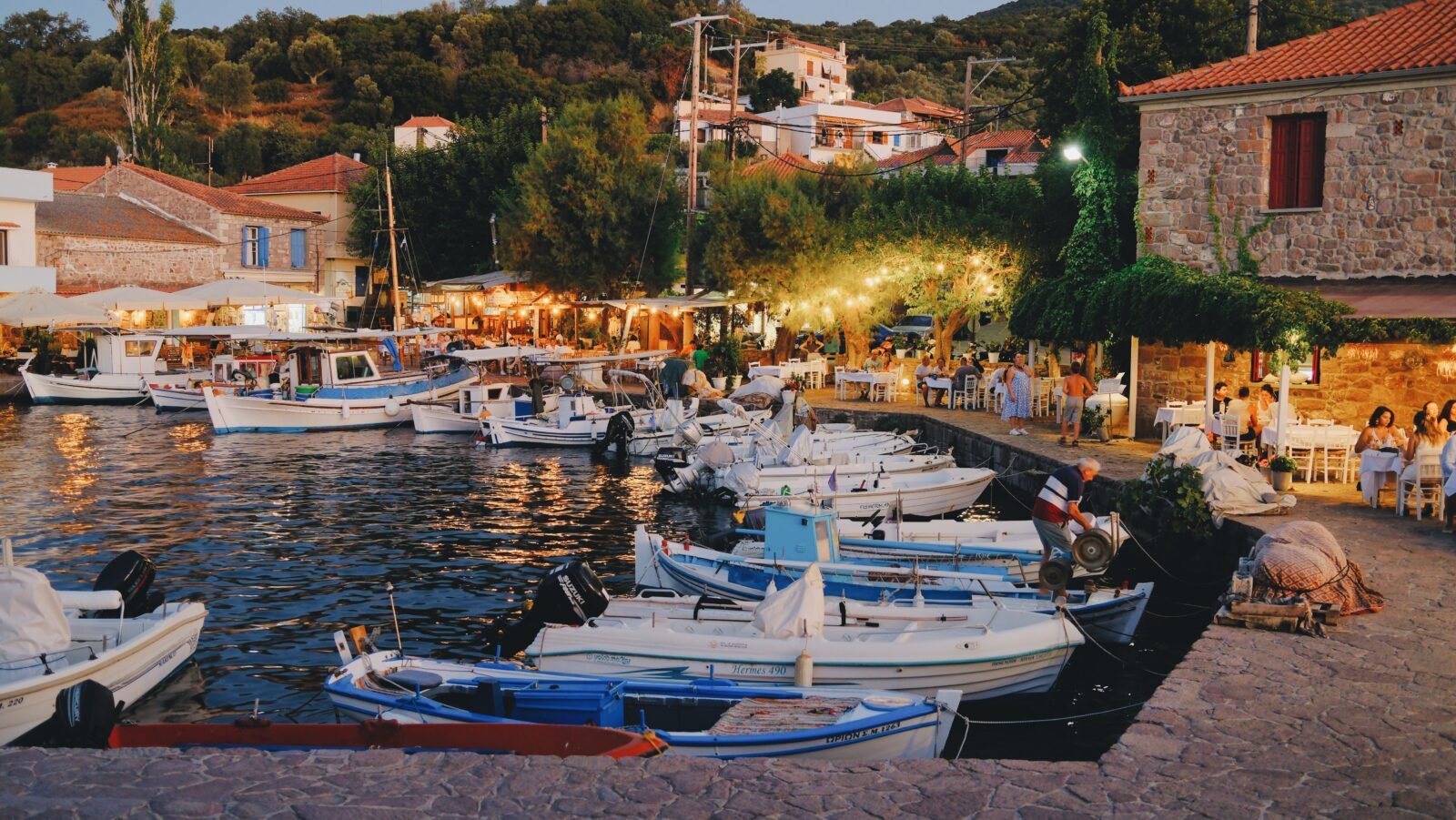
These are some of the most charming villages in Lesvos, and an absolute must when visiting the island. Here, you’ll find an authentic Greek experience and a real feel for what a genuine Greek village is like. One of the biggest perks of Lesvos is that it sees far less tourism than other Greek islands. A rental car is well worth arranging, since these villages are spread out across the island and are easiest to reach on your own schedule. Personally, I have little patience for generic resort towns, with their mediocre food and souvenir shops full of goods made in China. Add the tourist agencies handing out flyers and the inflatable pool toys destined for a short life on someone’s week-long summer trip, and it’s simply not my scene.
The Most Charming Villages in Lesvos at a Glance
MOLYVOS: Cobblestone streets, sea-view tavernas and a hilltop fortress, the most photogenic base on the island.
AGIASOS: A mountain village bursting with art, ceramics and café culture.
MANTAMADOS: A quiet inland stop known for ceramics and local charm.
SKALA SIKAMINEAS: A tiny fishing harbor perfect for fresh seafood and a hilltop church.
PLOMARI: Pebble beaches, ouzo tastings and an unforgettable olive oil experience.
SIGRI: Home to the Petrified Forest museum and a laid-back lunch stop.
SKALA KALLONI: A quiet beach promenade with street art, fishing boats and sunbeds.
1. Molyvos: A Picturesque Village Crowned by a Hilltop Fortress
Don’t forget to check out my complete guide to Lesvos, Greece for more on planning your trip.
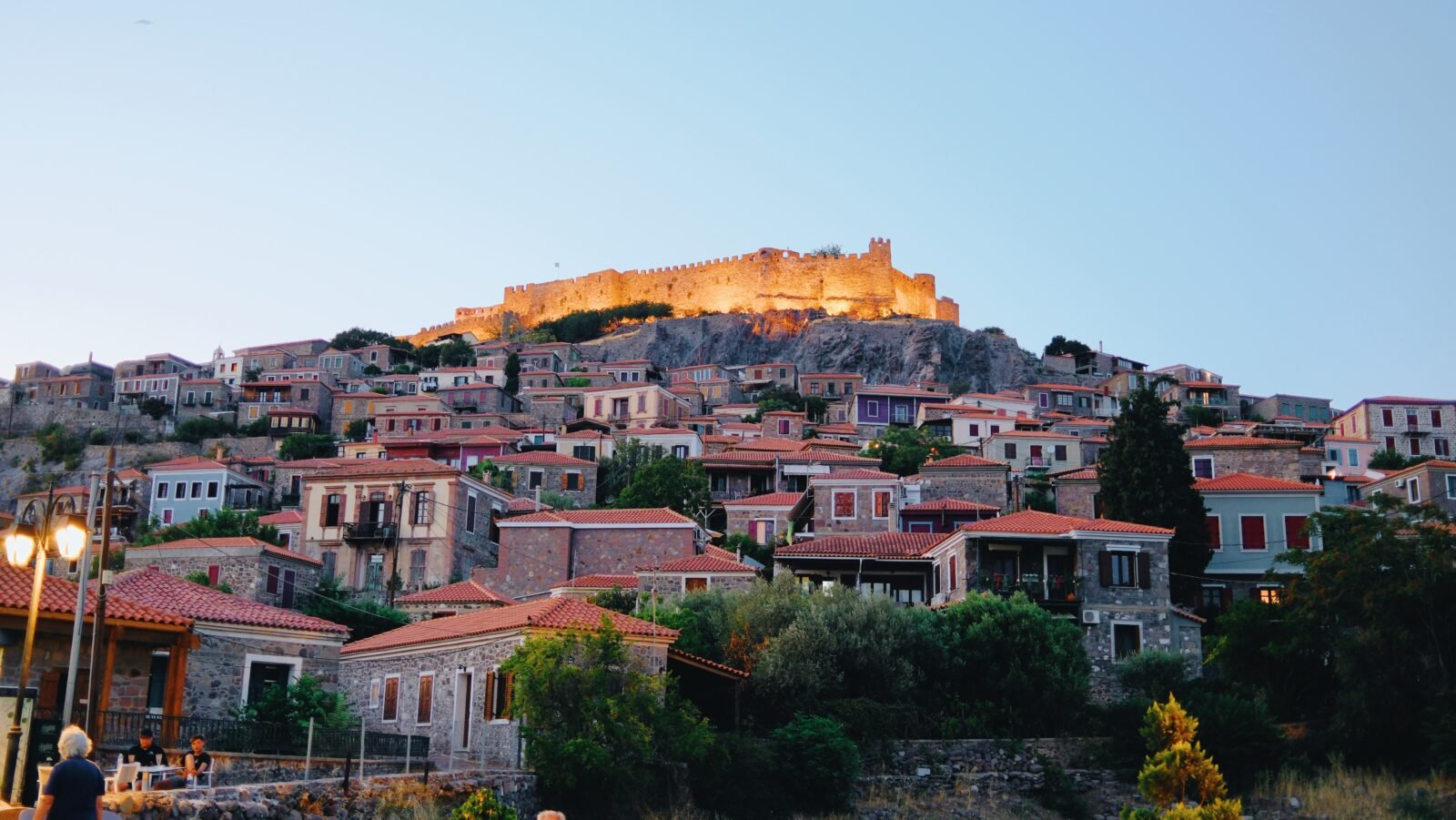
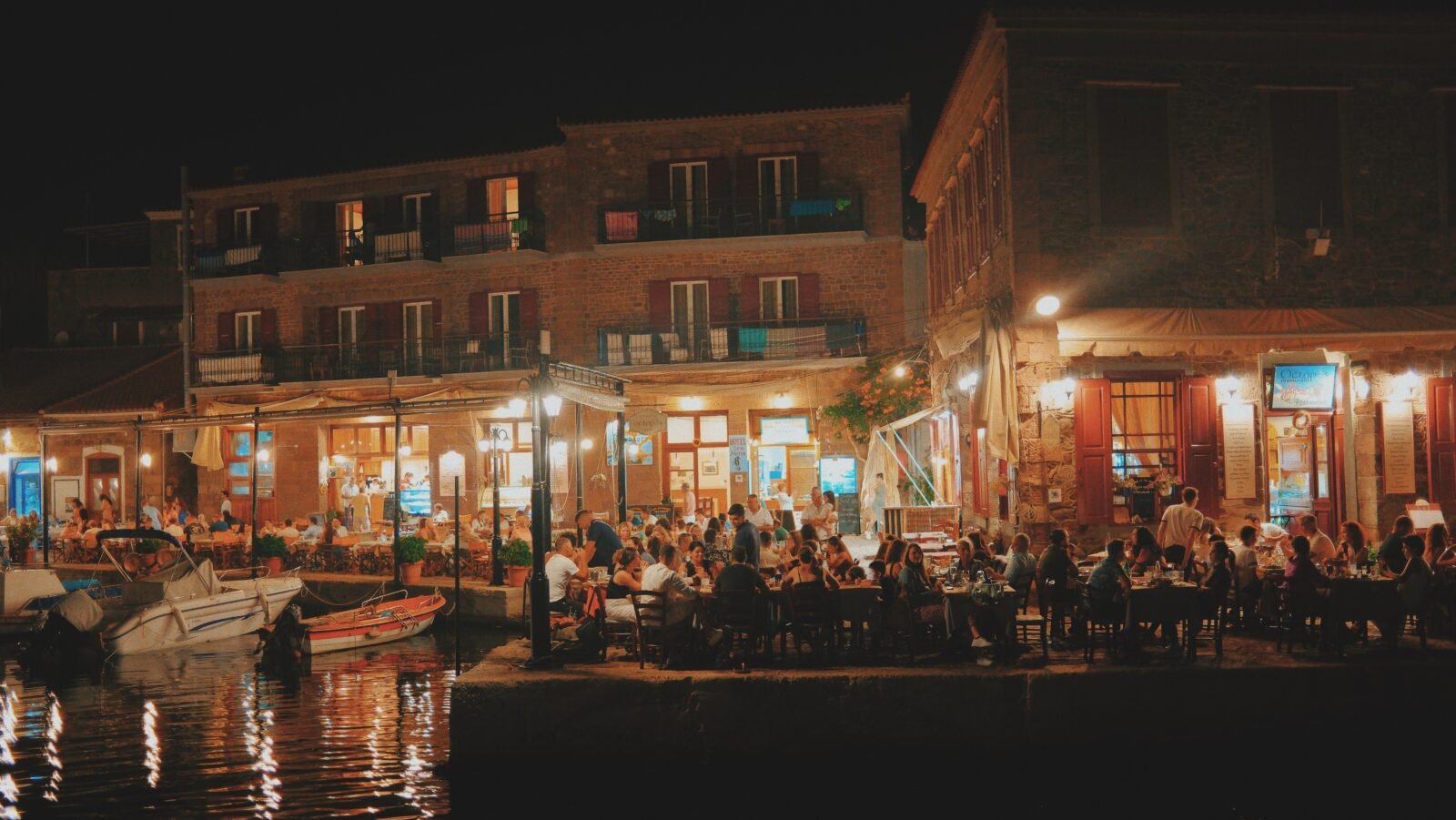
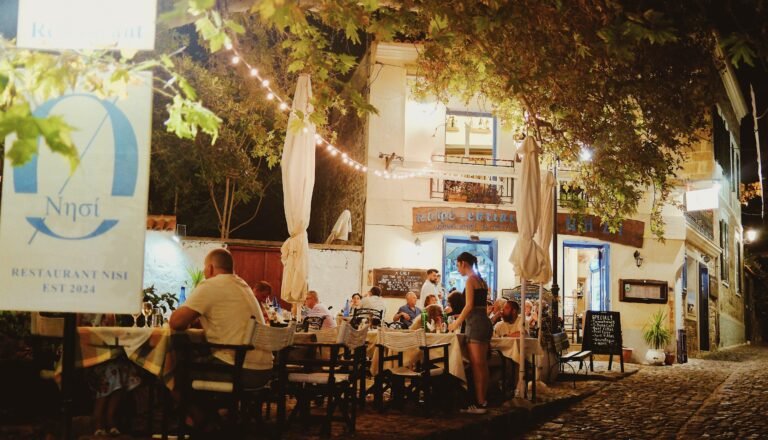
We based ourselves in Molyvos, one of the most charming villages in Lesvos, and I can’t recommend it enough. Its cobblestone streets wind around stone houses and climb toward a fortress at the top. Every corner feels like part of the same story, giving the whole town a rare kind of visual unity. Several restaurant terraces offer sweeping sea views, or you can opt for dinner tucked into a cobblestone square, where cats doze on the nearest bench — or, if you’re unlucky, on the chair right next to you.
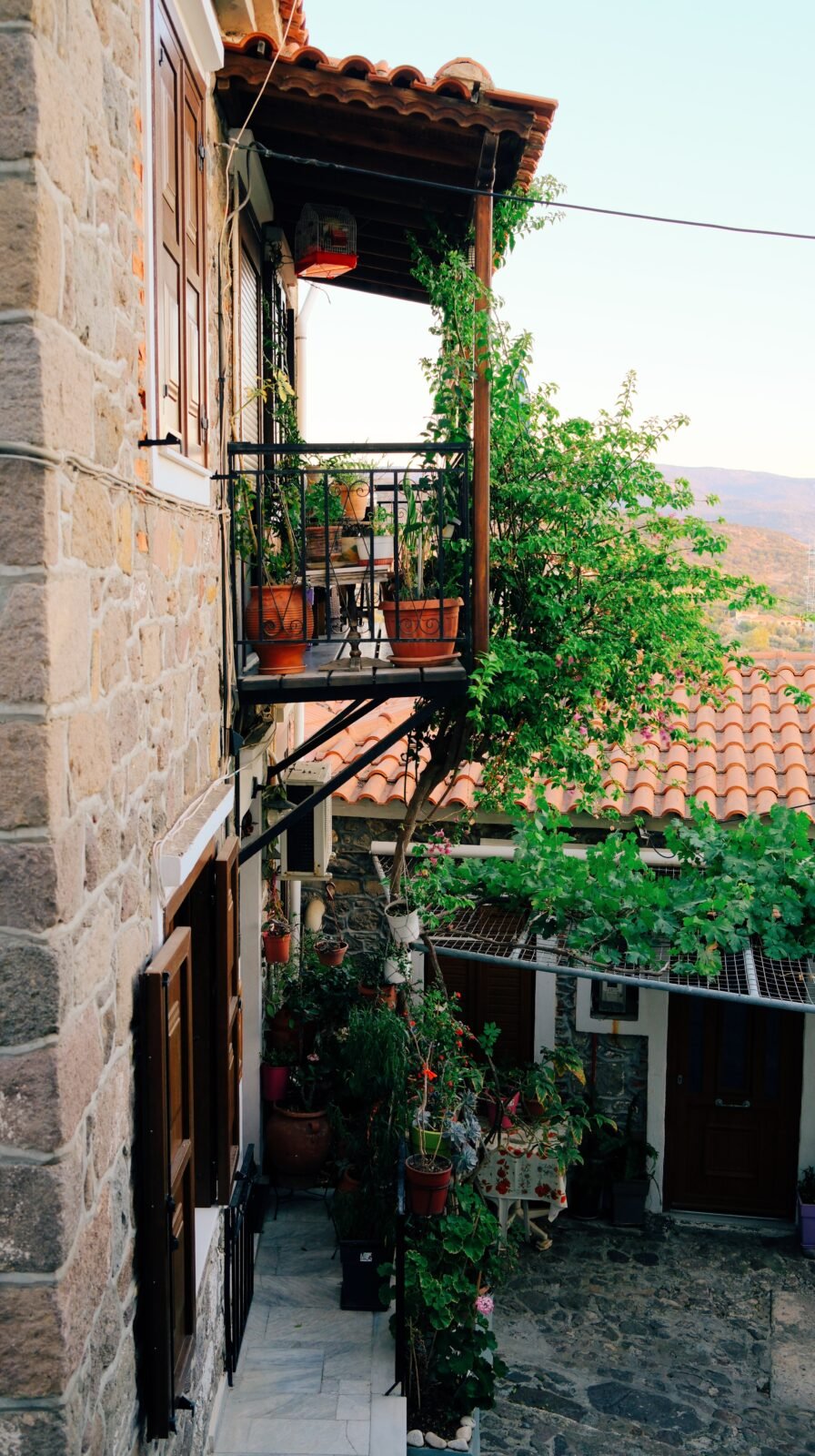
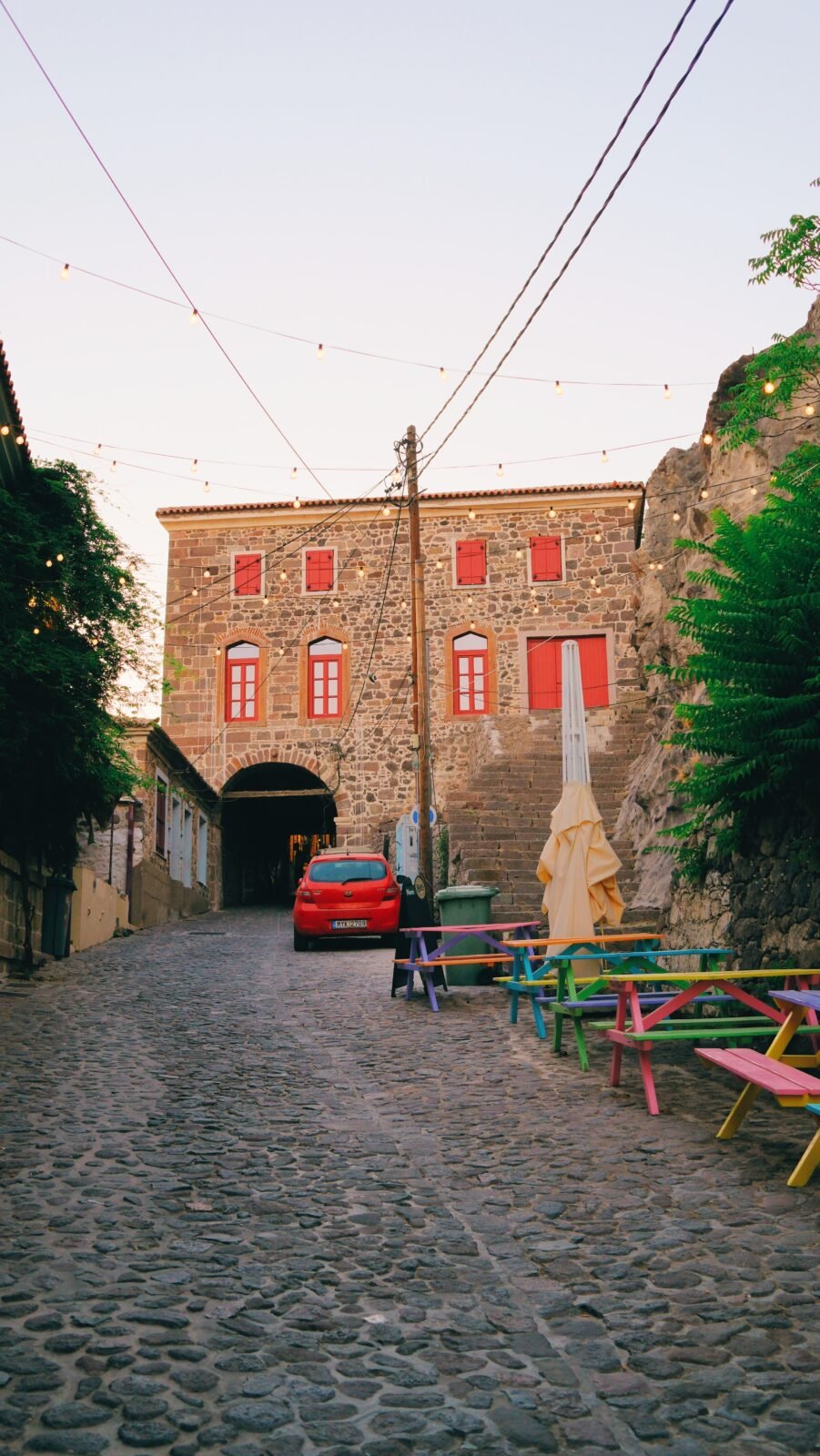
There’s something about this town I still can’t quite put my finger on. It manages to feel lively and peaceful at once — streets quiet enough to get lost in thought, yet never empty — leaving you with a genuine sense of calm. Still, even if you’re not staying here, spend at least an afternoon and evening in Molyvos, since it looks completely different by daylight than it does after dark.
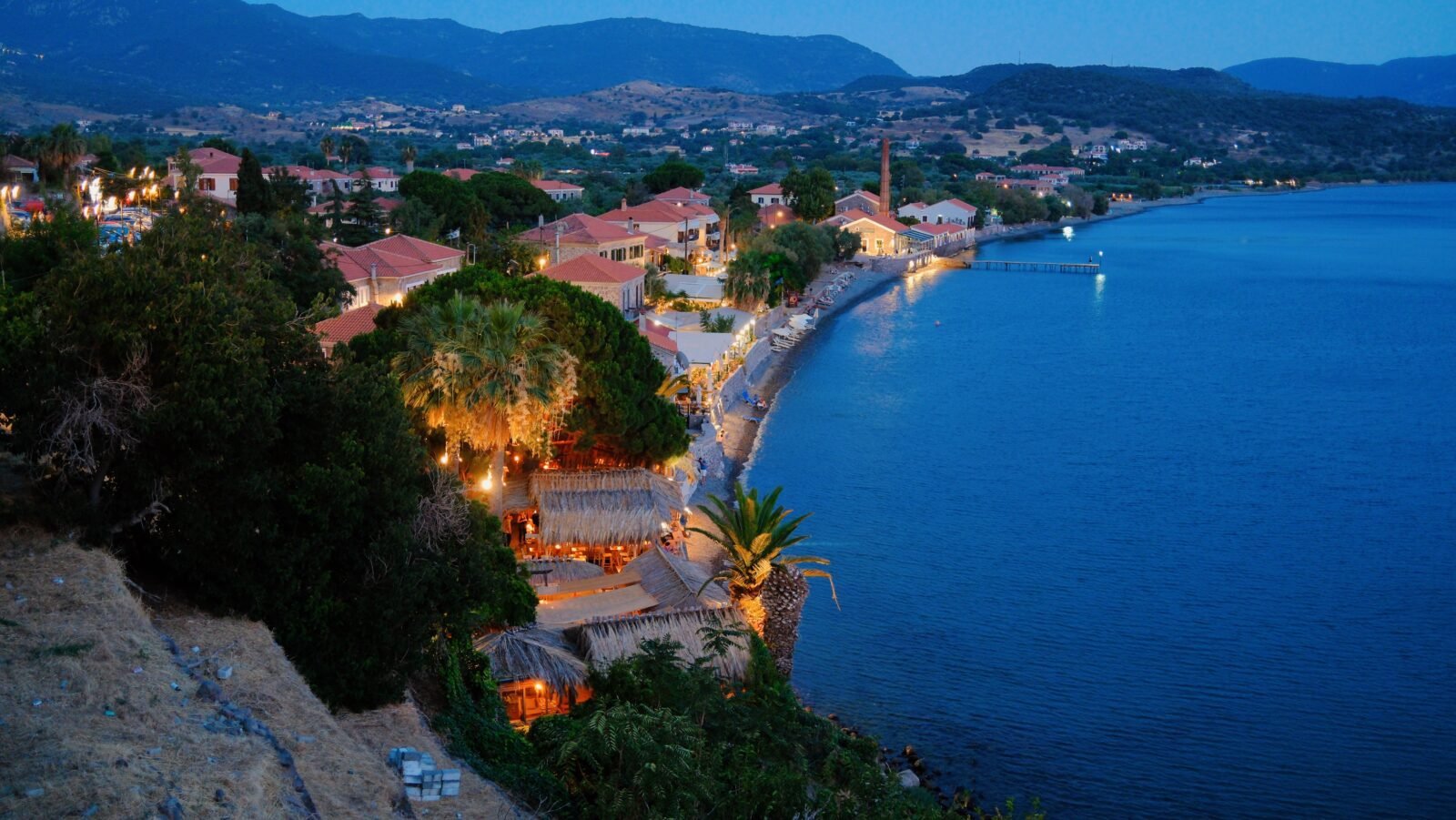
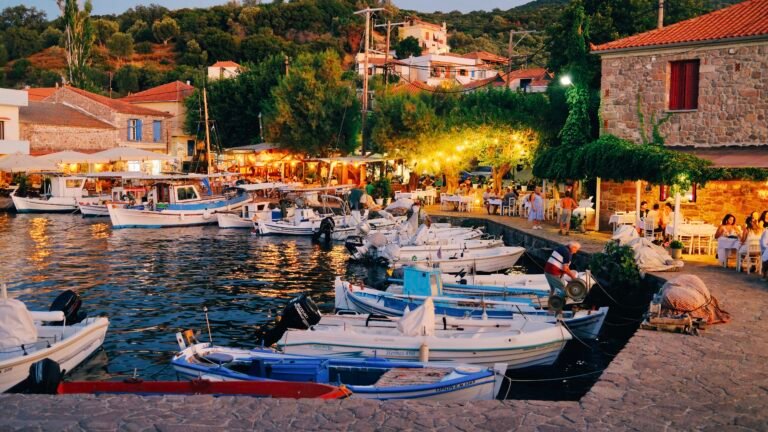
Meanwhile, the harbor is just as inviting. Fishing boats bob alongside waterfront restaurants, about as Greek a scene as you’ll find. Once dinner wraps up, a handful of bars nearby make for a relaxed nightcap.
2. Agiasos: One of the Most Charming Villages in Lesvos
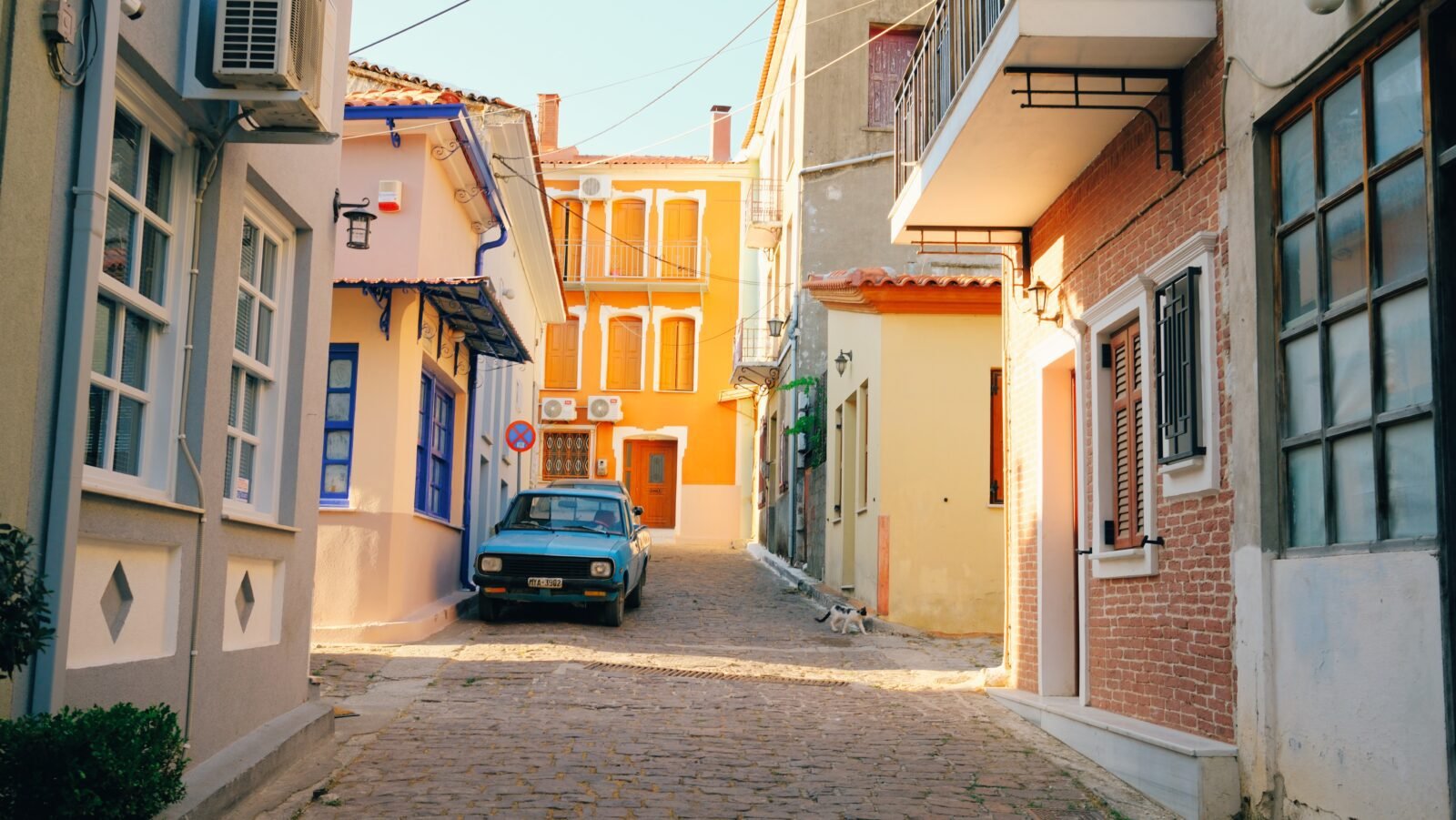
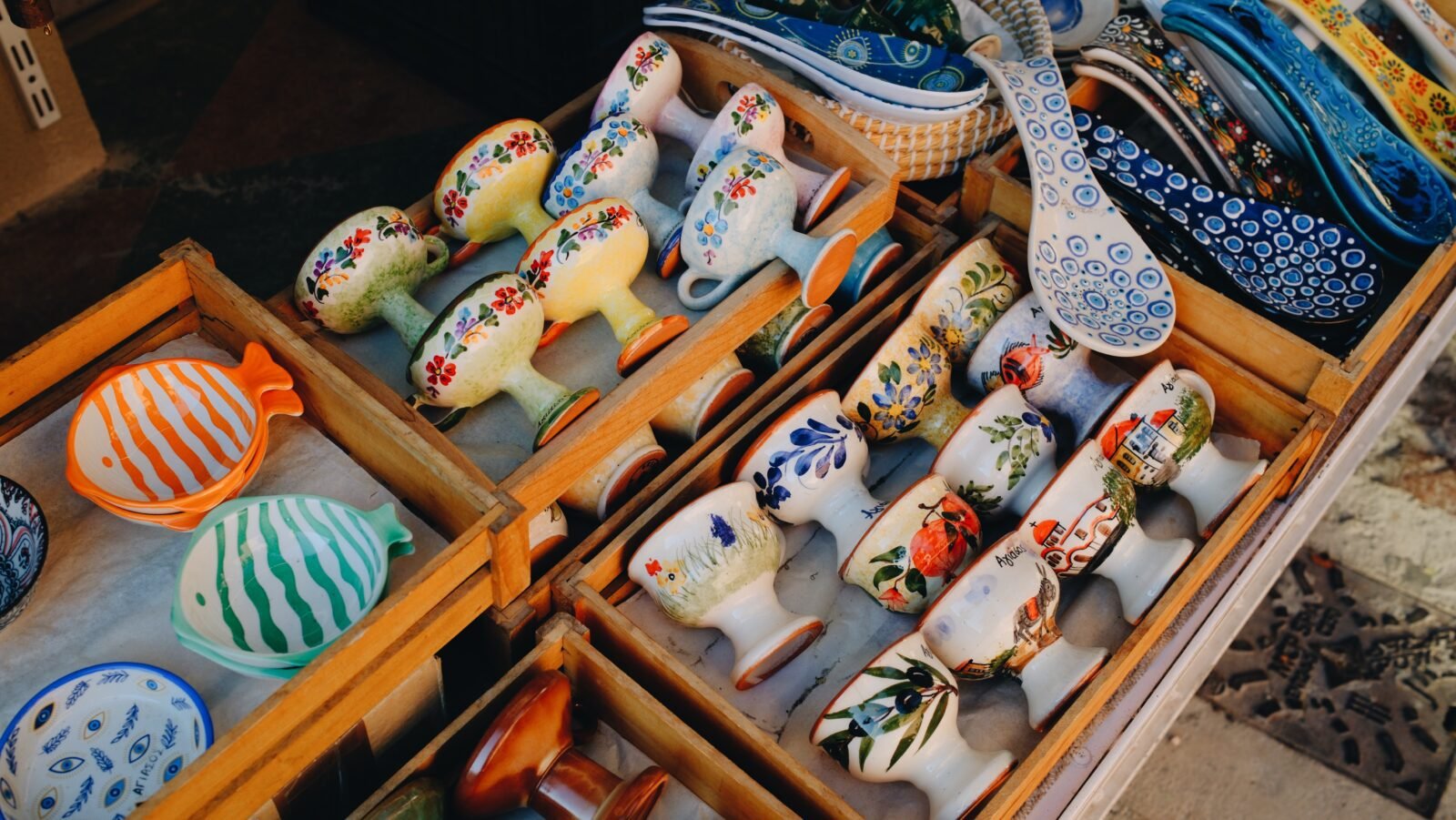
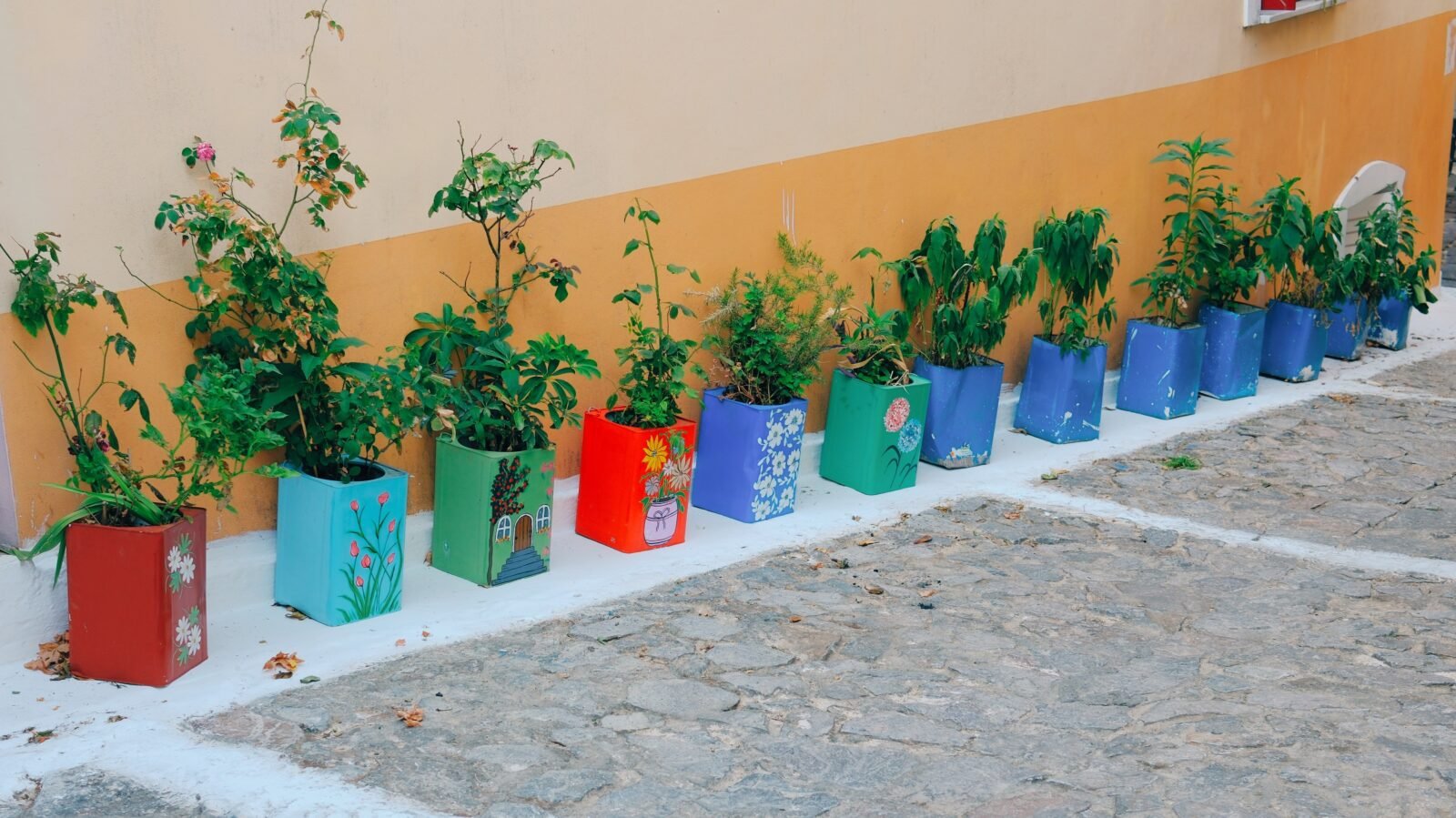
Of all the villages we visited on Lesvos, Agiasos won me over the most. In fact, it’s a haven for art, ceramics and handmade goods, tucked among colorful houses and narrow streets that beg to be photographed. Start with a freddo coffee, and settle into the unhurried pace at one of the town’s many cafés. Wander deeper between the tightly packed houses, and you’ll come across the village church — worth the detour on its own. Agiasos proves you don’t need a sea view to be beautiful.
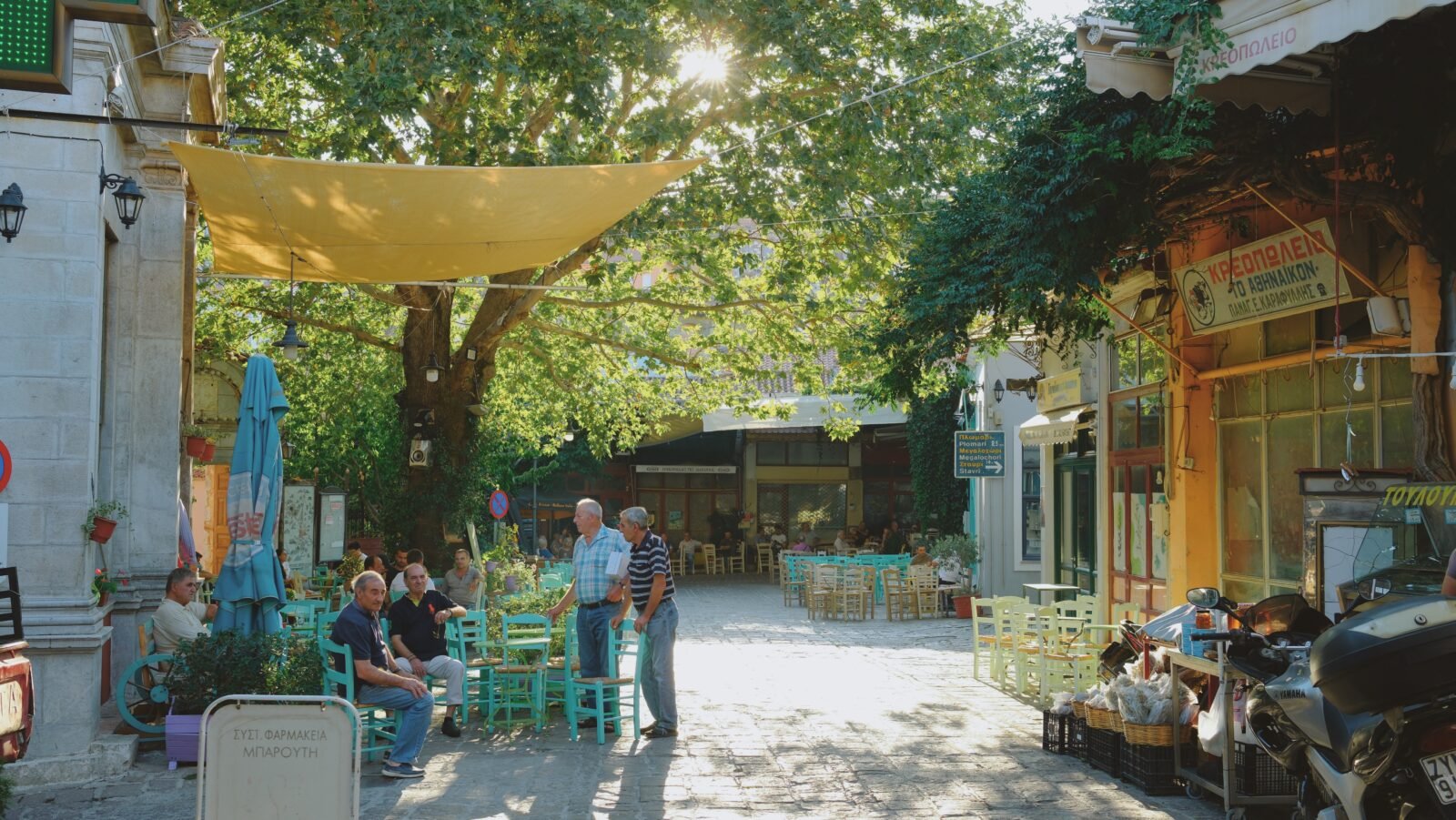
In the squares, you’ll find locals gathered for conversation — an honest glimpse into daily life for Greece’s older generation. In fact, we were struck by how many elderly residents call this village home, a small but telling sign of the country’s aging population.
Good to know
Park at the lower edge of town, before the “Visit Agiasos” sign — it’s a short, easy walk in from there.
3. Mantamados: A Quiet Ceramics Village
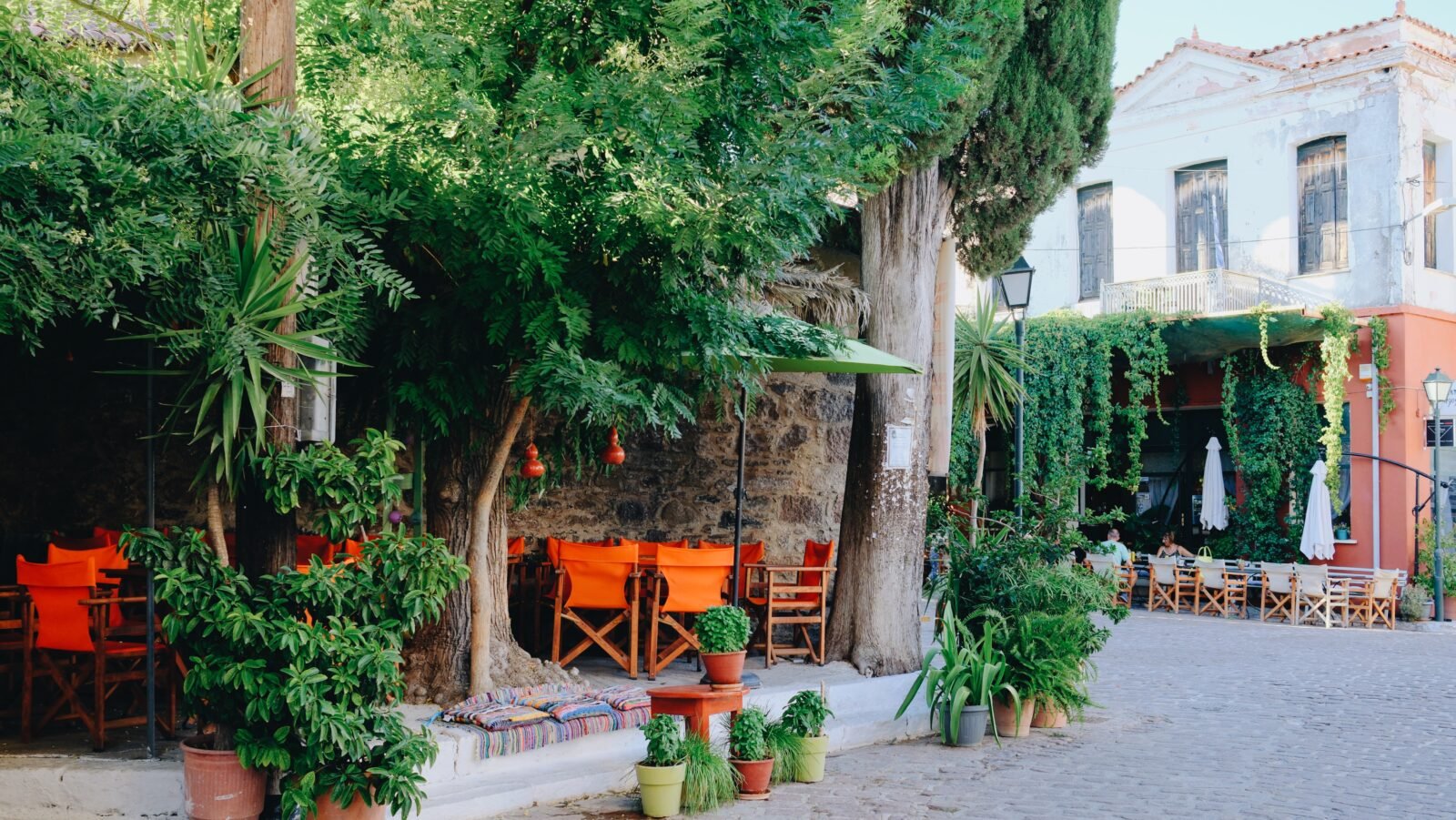
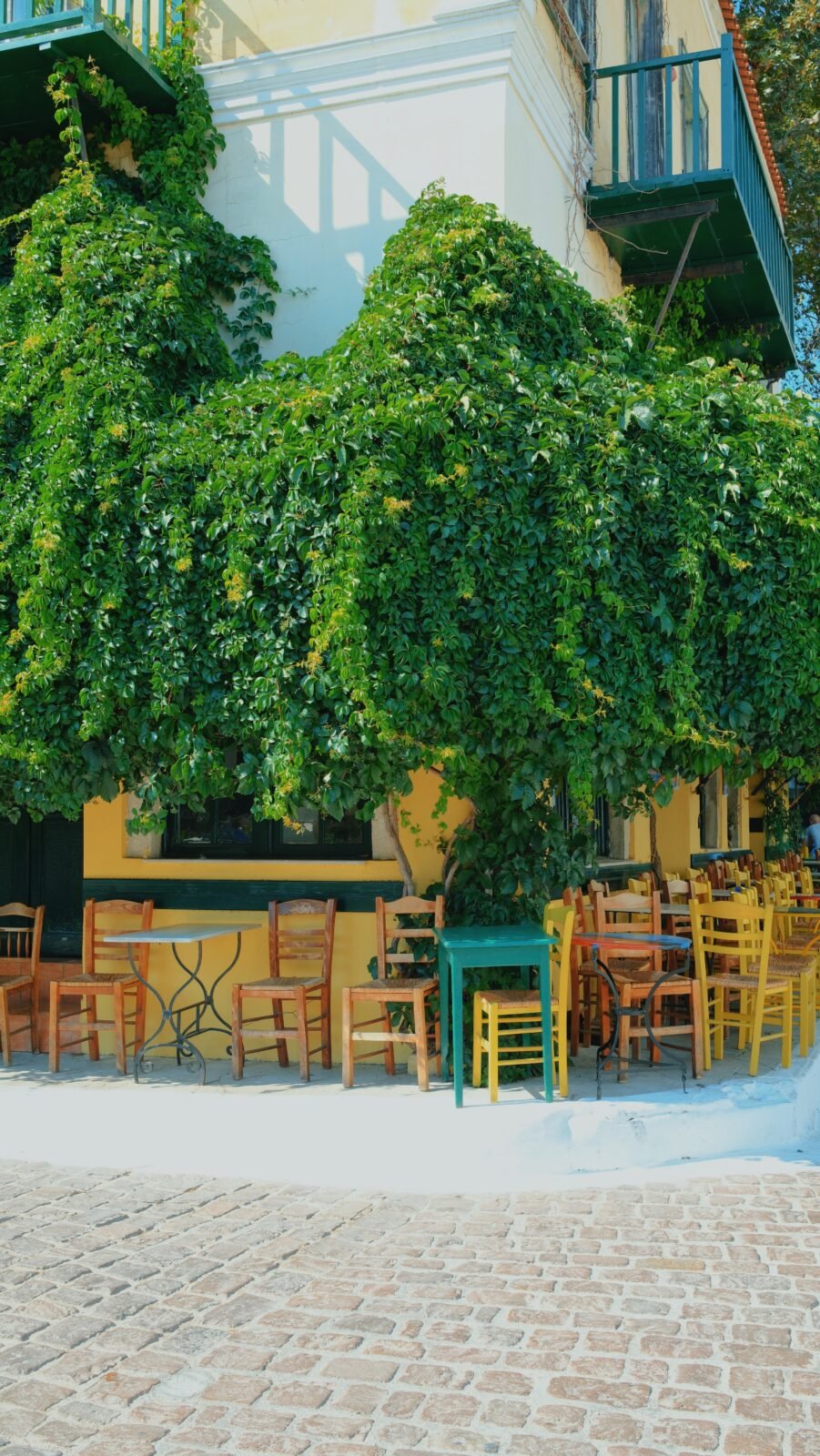
Set further inland, Mantamados is just as worth the detour. At the heart of the village sits To Kentro 1904, a café where plants grow like a living roof over the entire outdoor seating area — a genuinely striking sight. In fact, their honey yogurt with granola has quite the reputation, and the lemonade isn’t bad either. We spent a happy hour simply wandering its quiet streets.
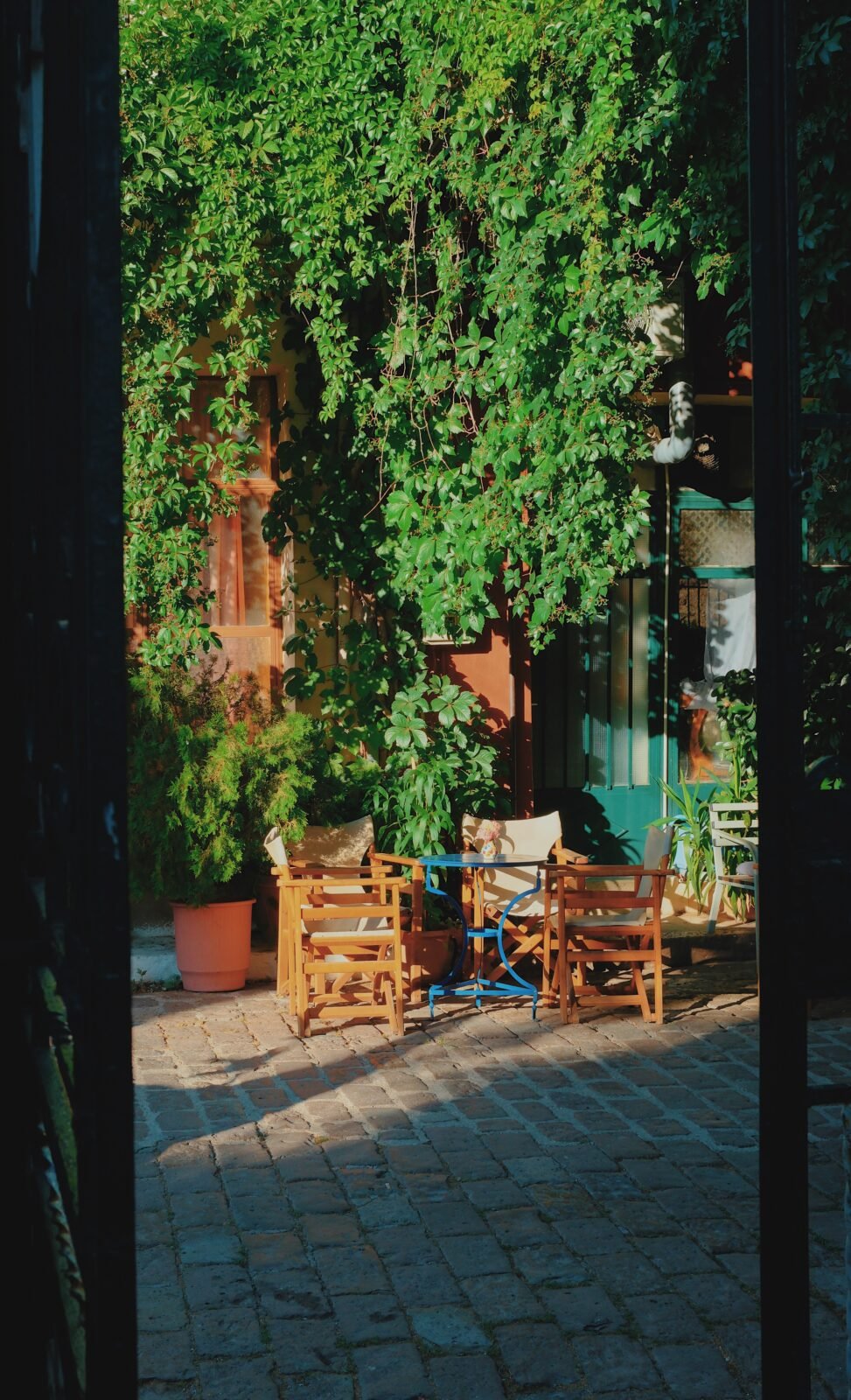
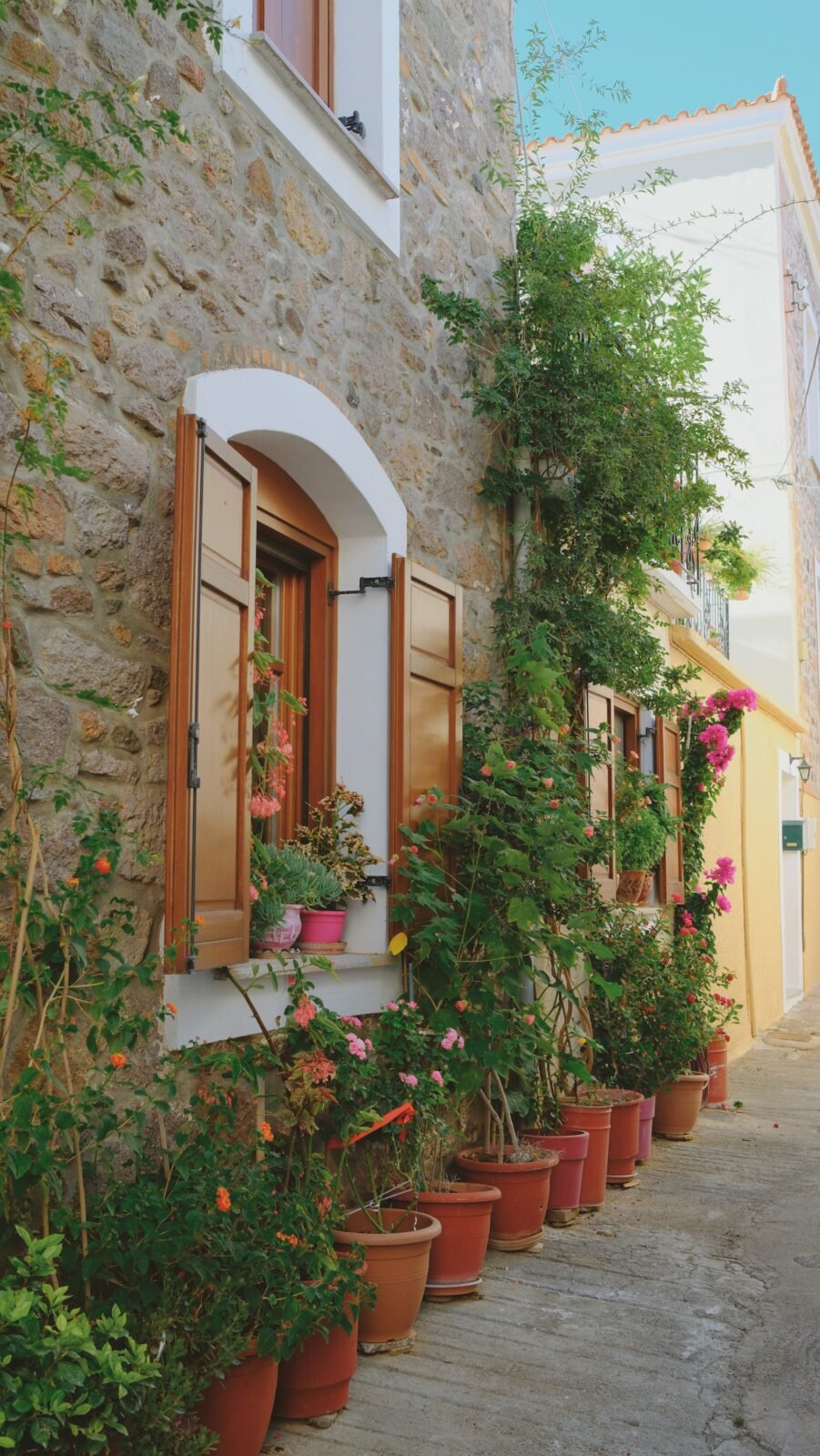
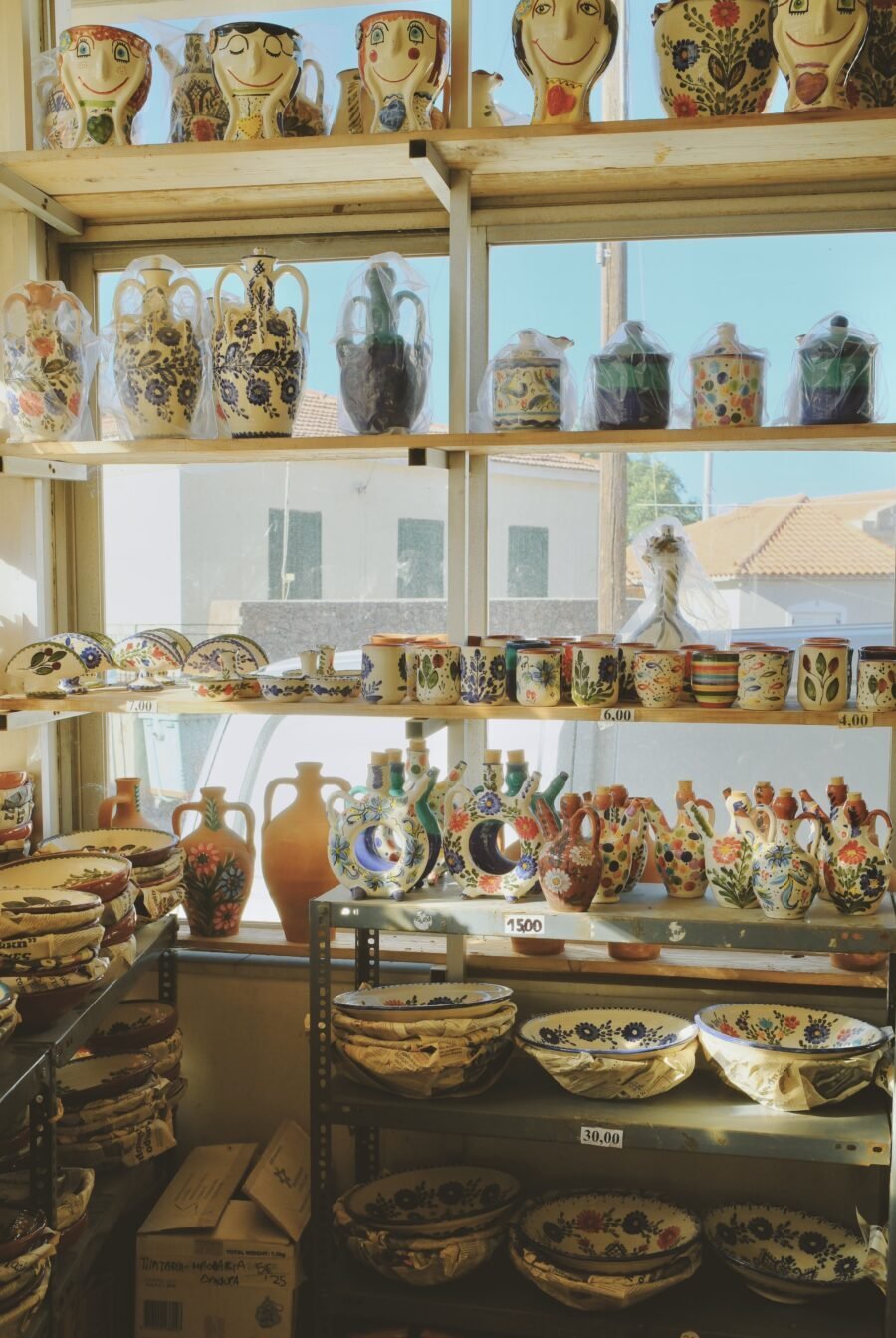
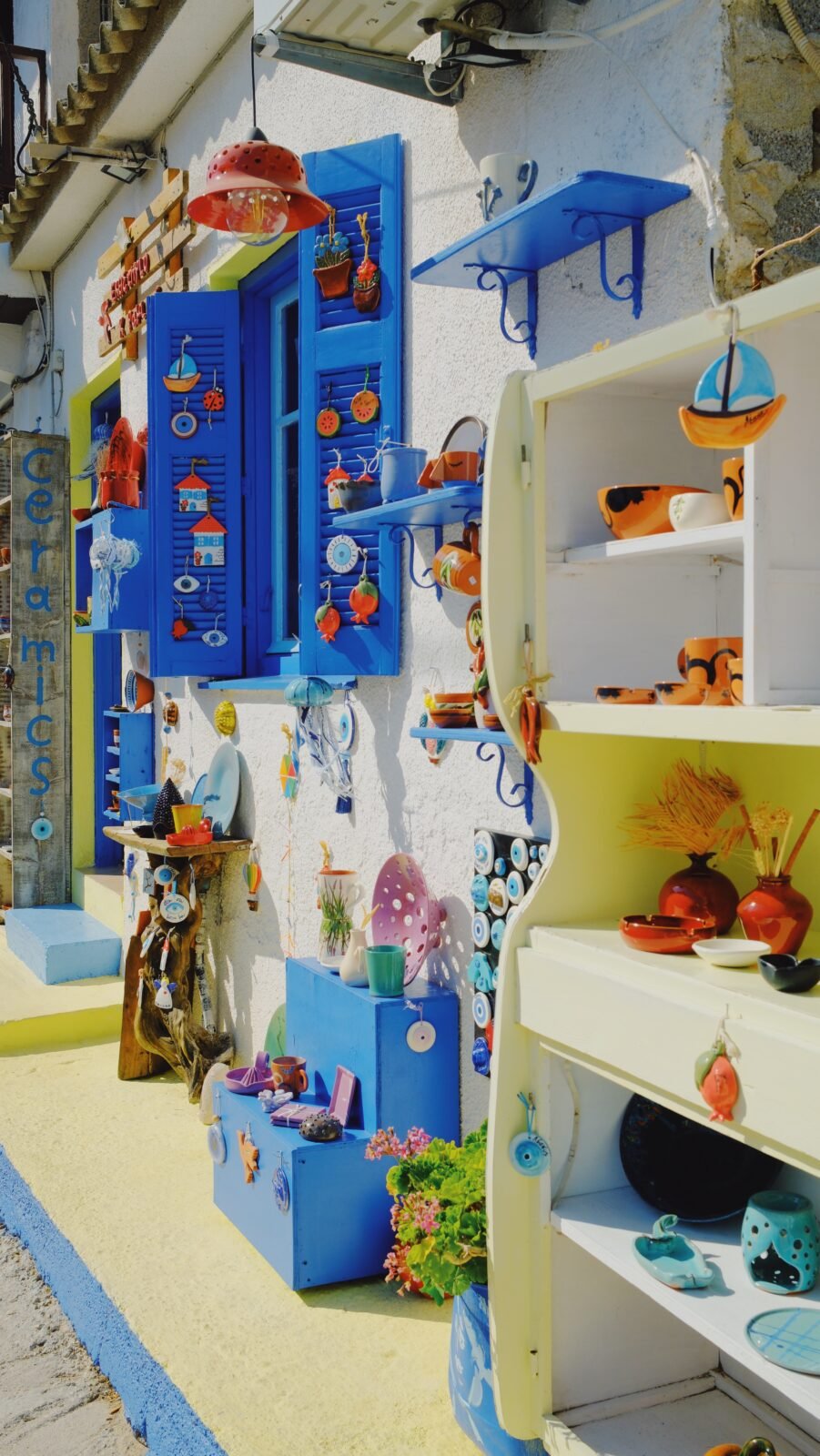
Keep an eye out, too, for the local artists producing ceramics and pottery worth bringing home. For example, one elderly potter we met spoke very little English, but a smile and some patience go a long way. Bring cash, since card machines are rare here — a handmade Greek ceramic is worth the extra planning.
Good to know
Most of the pottery stalls don’t take cards. And if a shop has a no-photography sign, honor it — a polite ask before shooting inside goes a long way.
4. Skala Sikamineas: A Tiny, Postcard-Perfect Fishing Village
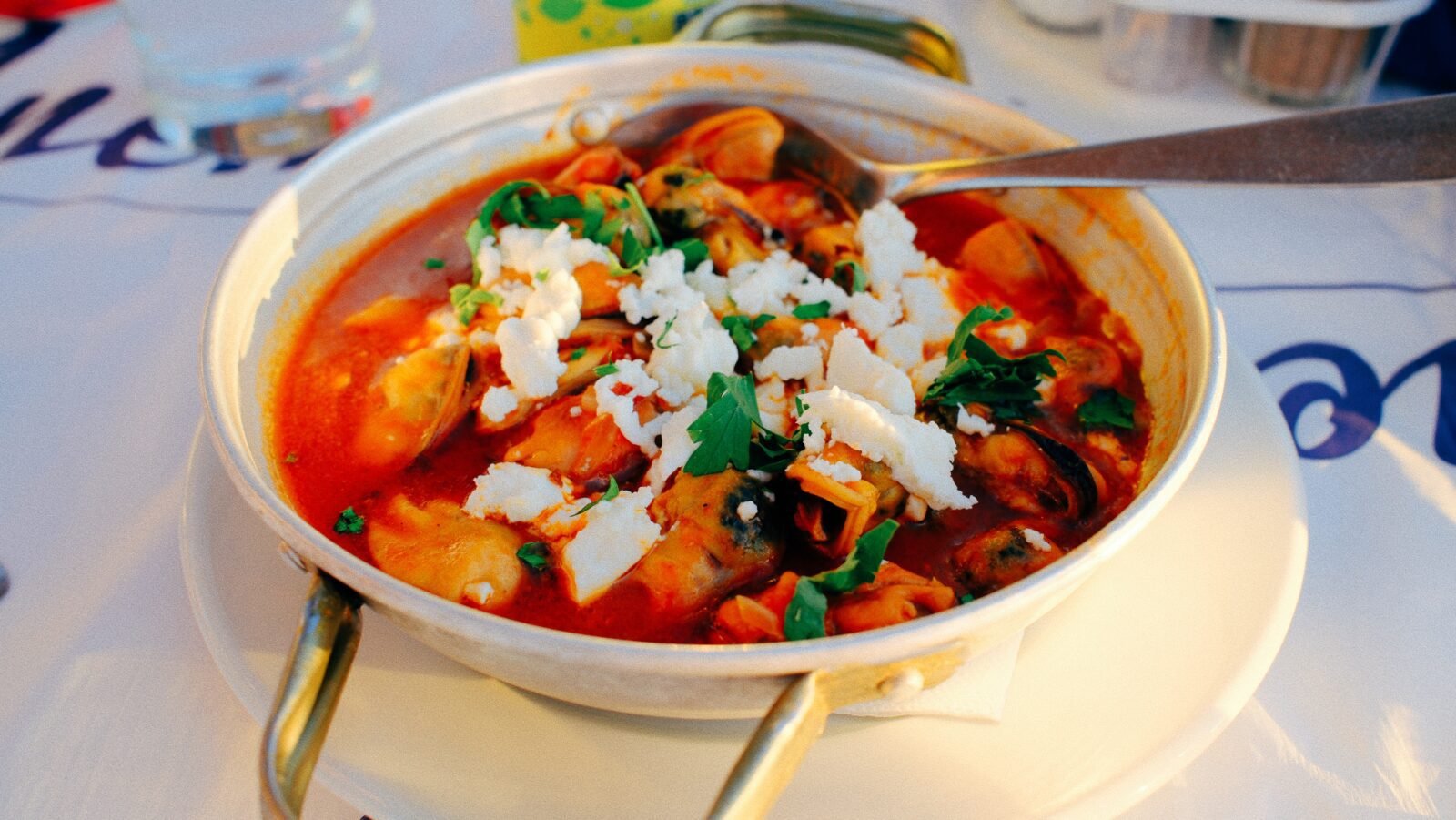
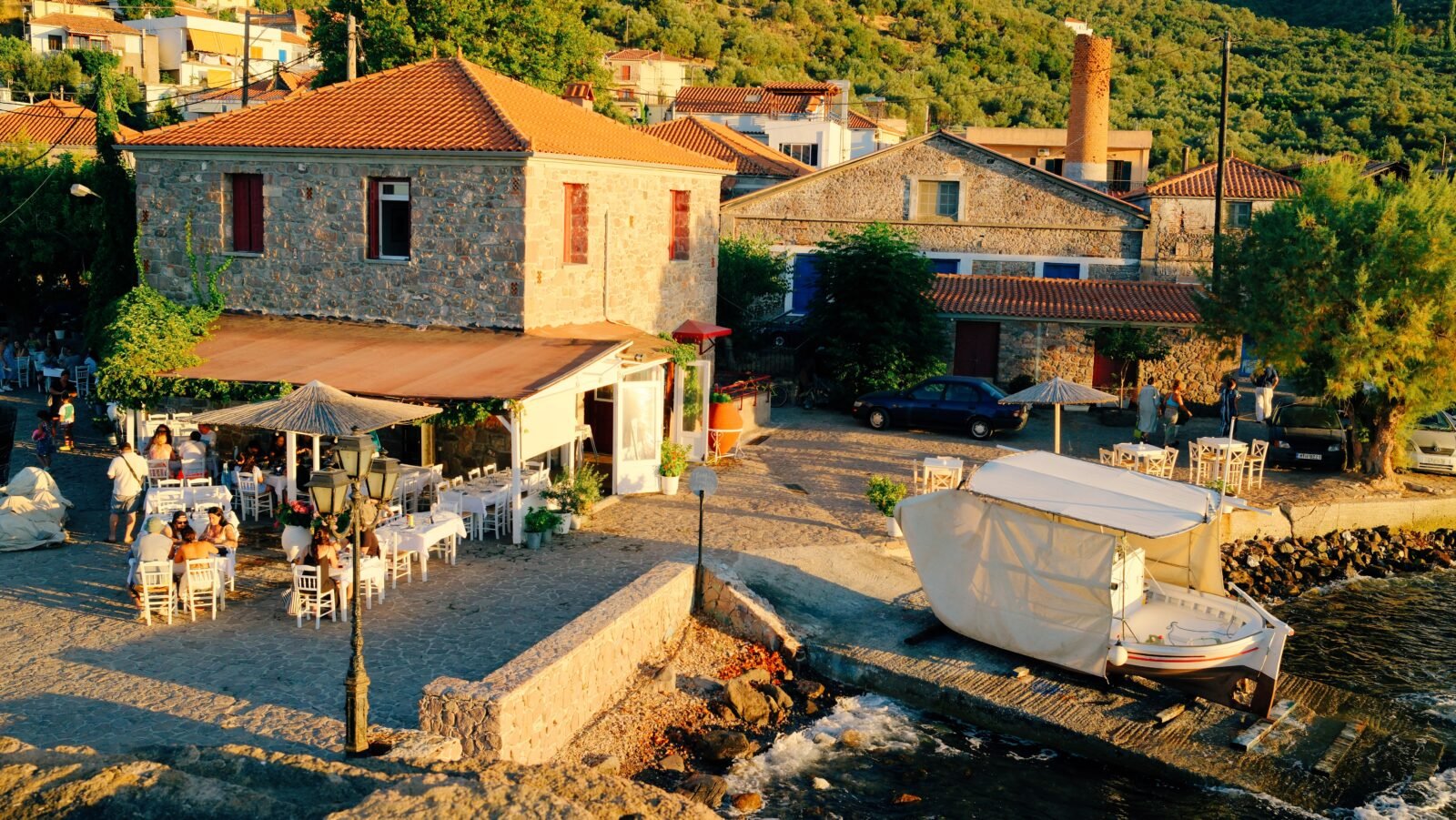
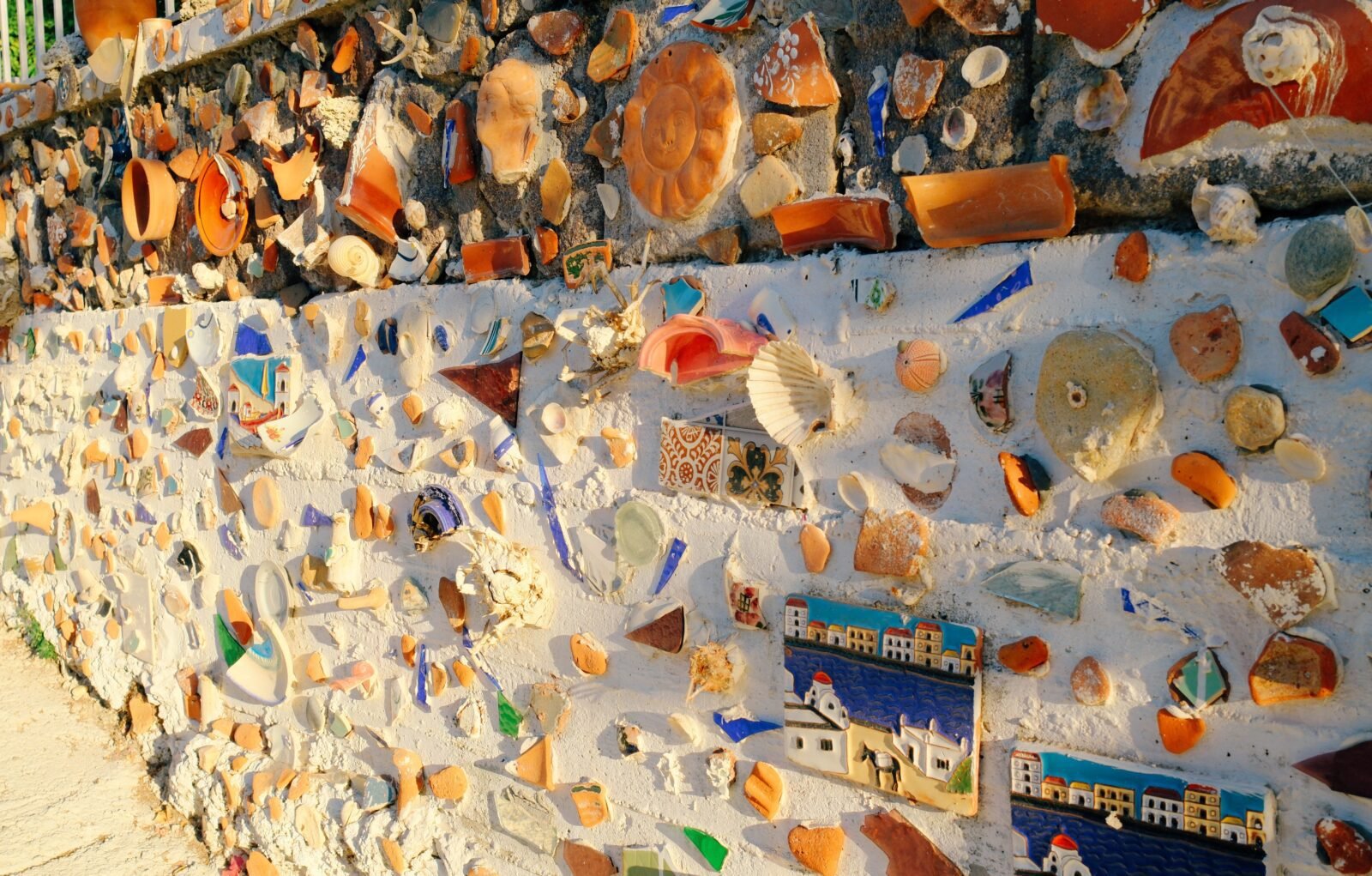
This pint-sized fishing village punches well above its weight in charm. Also, along the harbor, a string of fish restaurants serves the day’s catch — order the seafood, not the steak (lesson learned the hard way). A small church sits at the far end of the harbor, worth the climb for the view back over the village. Overall, you won’t need a full day here, but it’s an easy, satisfying stop for a meal and some quiet harbor-watching.
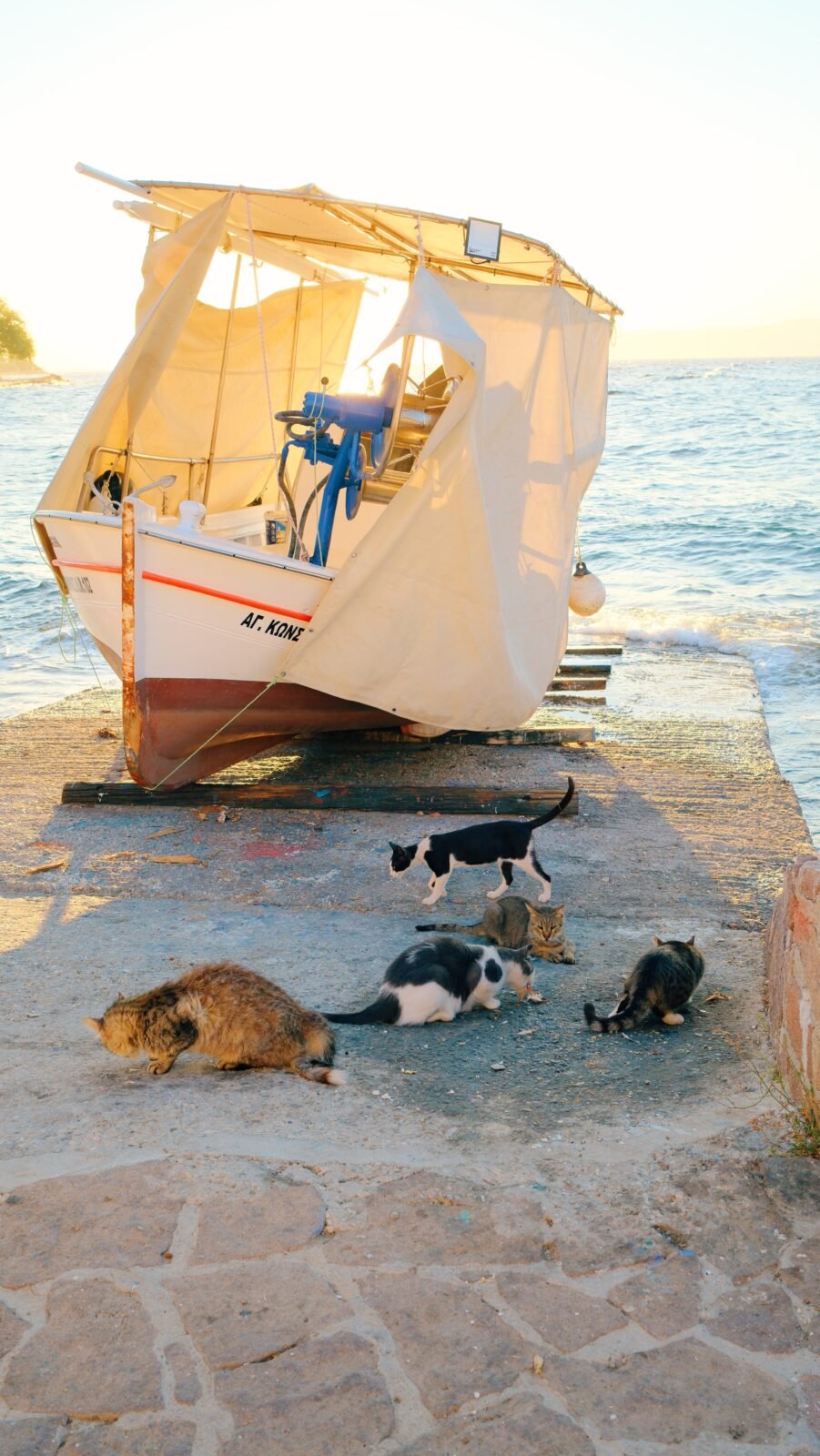
If you can, time your visit around sunset. That’s when Skala Sikamineas really shows its best side: the restaurant lights start reflecting off the water, and the harbor fills with people settling in for the evening. As a result, the whole place takes on a warmer, more lived-in feel than it has during the day, and it’s worth staying a while just to watch it happen.
Good to know
Driving tip — Google Maps loves to route you along the waterfront road; don’t trust it, that stretch isn’t built for cars. Take the inland route past the Kostas Street Art instead (free parking there too), and go easy on the gears, the climb is steep.
5. Plomari: Ouzo, Olive Oil and Pebble Beaches
Plomari is one of the bigger towns on the island, so don’t expect the same intimate charm as elsewhere. Near the town center, the shoreline is scattered with smooth, perfectly round stones. Depending on the day, you might have long stretches of it to yourself. That said, water shoes are worth packing — the pebbles aren’t kind to bare feet. Beyond the beach, Plomari’s real highlights are the Ouzo Museum and Protoulis, hands down some of the most memorable hours of the whole trip.
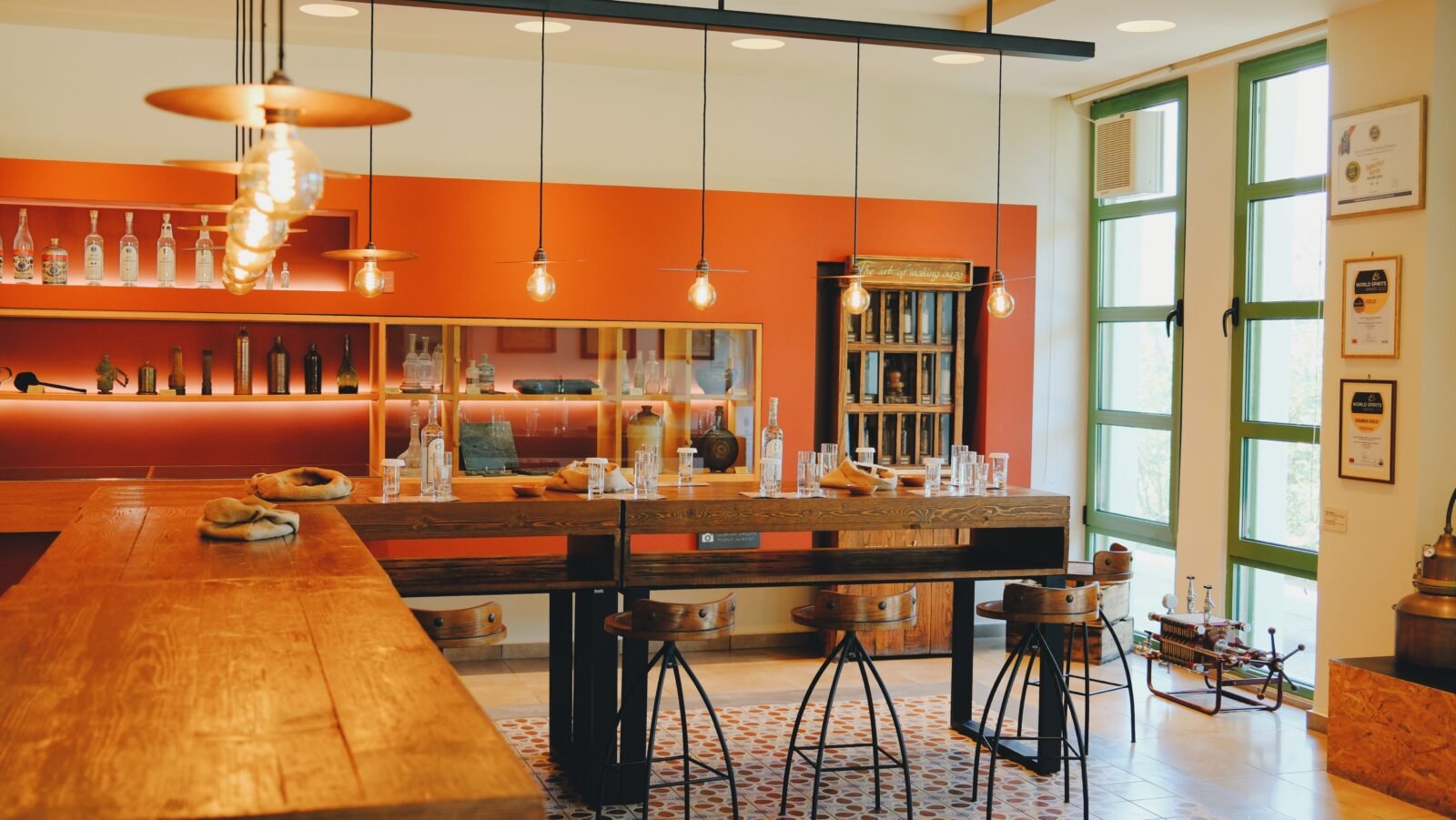
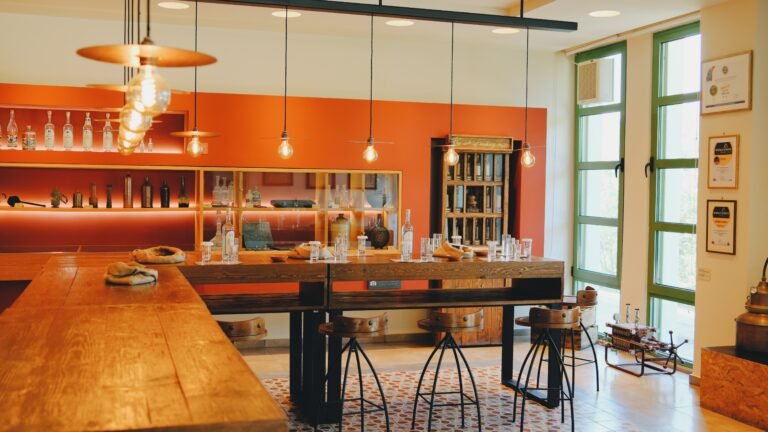
Ouzo Museum – At the Ouzo Museum, you’ll put on a coat, watch a short film on the distillery’s history, then tour the working distillery itself. It wraps up with a tasting, where you learn how ouzo is meant to be enjoyed and get a look at the ingredients behind it.


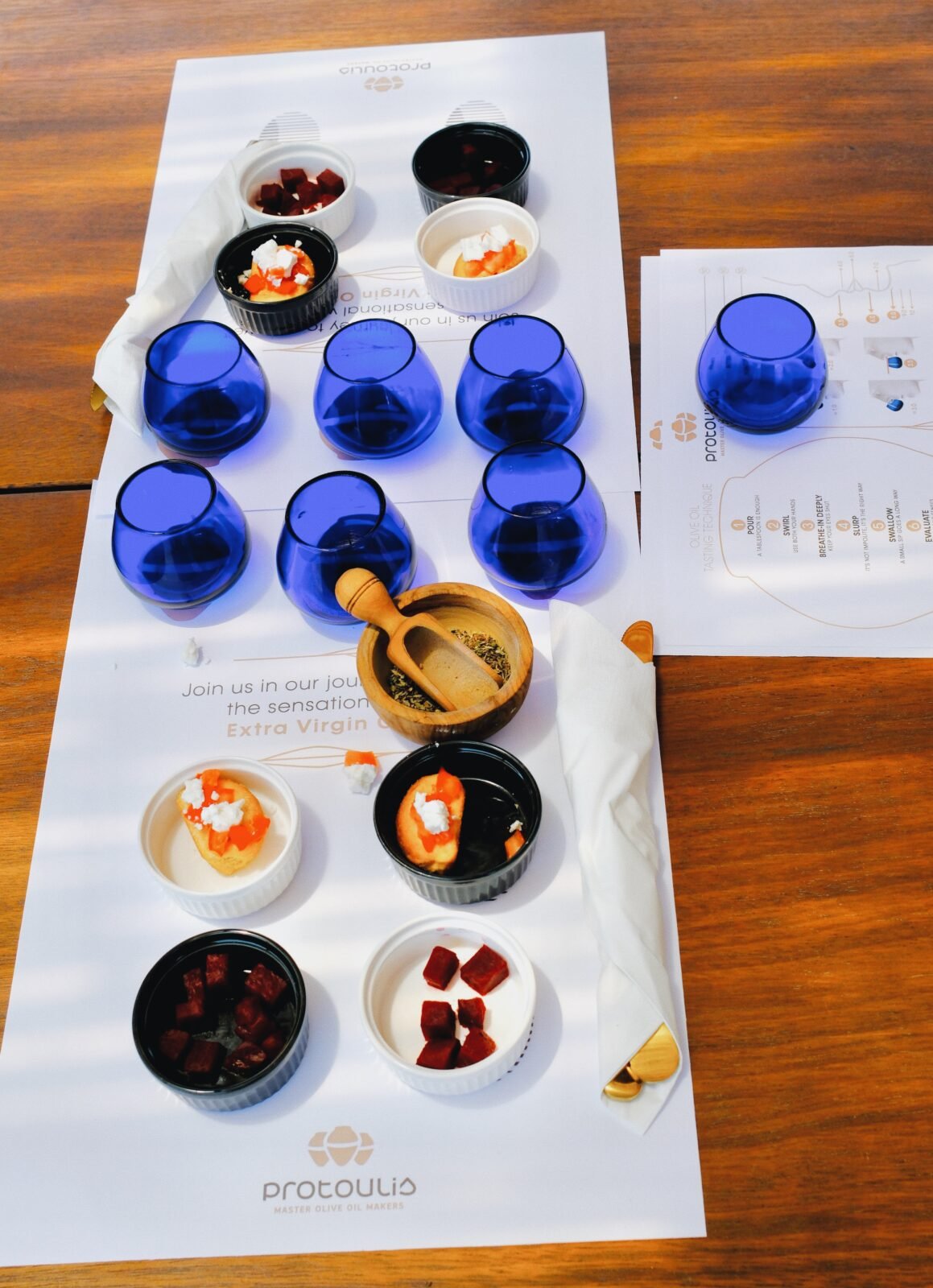
Protoulis Olive Mill and Museum – this is the experience we still talk about most. Indeed, I’ll leave the details for you to discover, but I haven’t looked at olive oil the same way since. We booked the extended “For Olive Oil Fans” tasting, half-jokingly calling ourselves fans before we’d even started. Much like a wine tasting, it walks you through different oils paired with different flavors. In the process, it shows just how much range exists in something most of us grab off a supermarket shelf without a second thought. We came away with a real appreciation for quality oil.
Good to know
Book ahead: reserve the “For Olive Oil Fans” experience at Protoulis before you arrive. Stop by the distillery right down the street before or after your visit to Protoulis — no need to book in advance. Pack water shoes if you’re swimming in Plomari; the beach is pebbly underfoot.
6. Sigri: A Laid-Back Village by the Sea
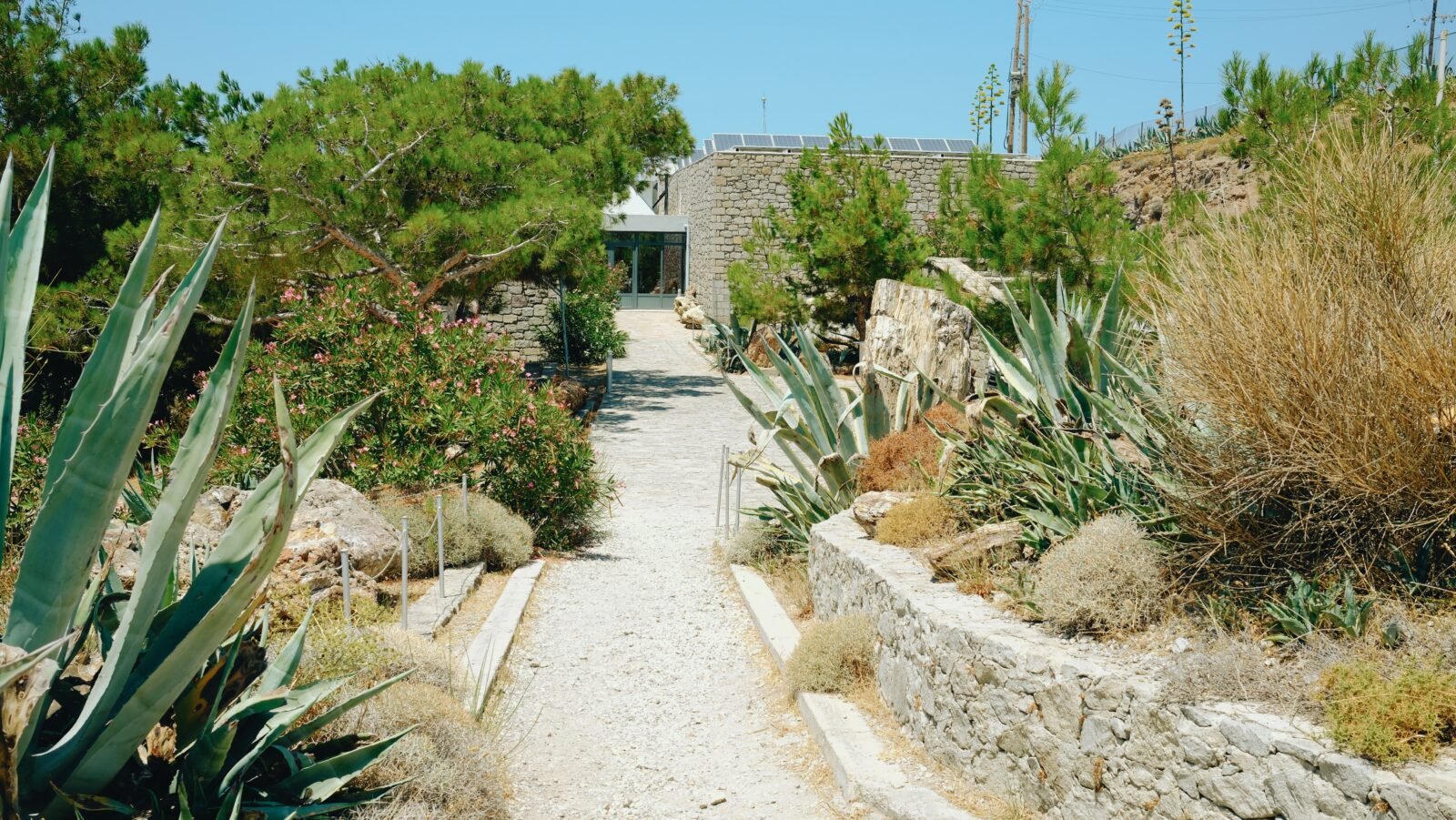
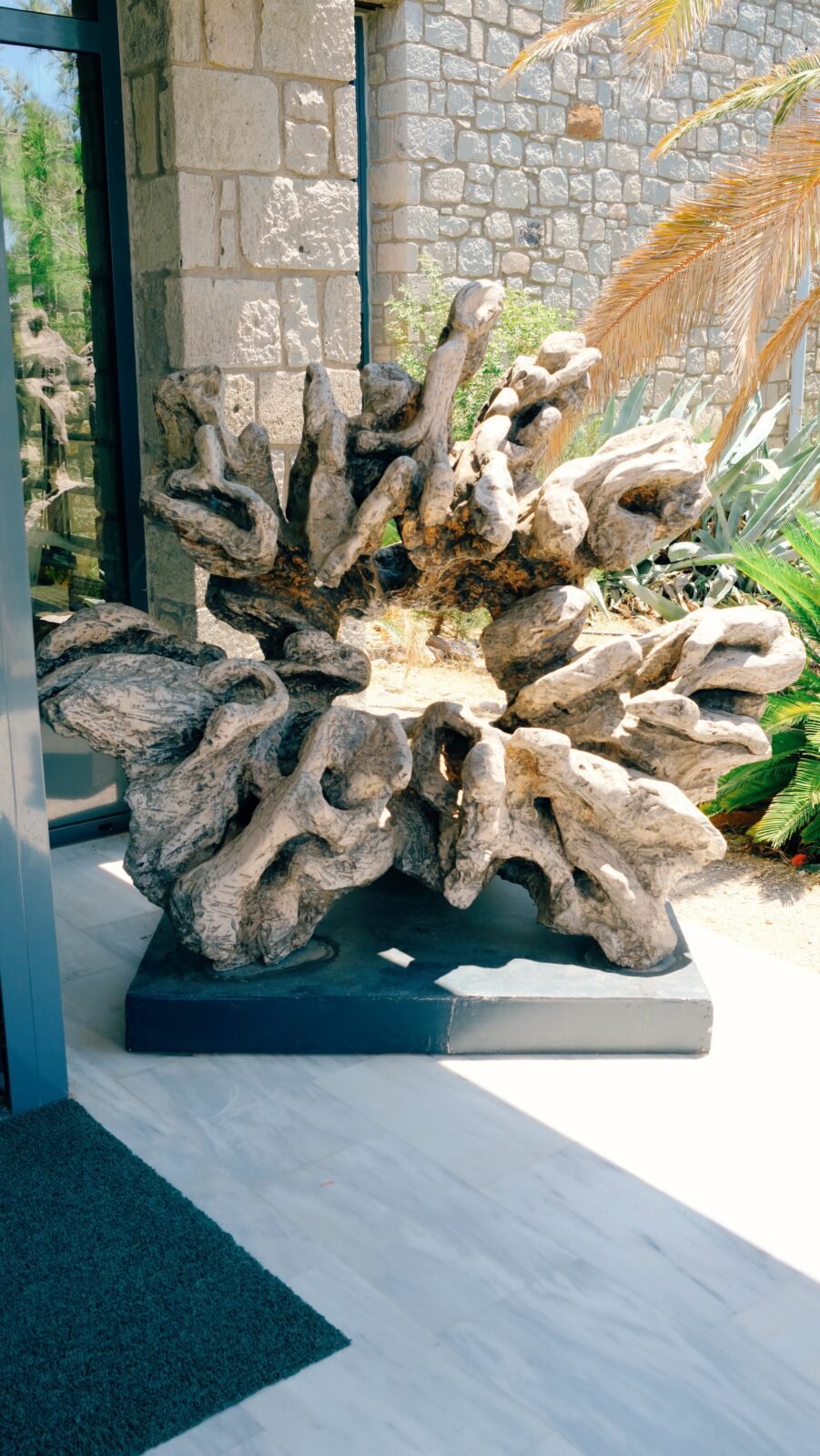
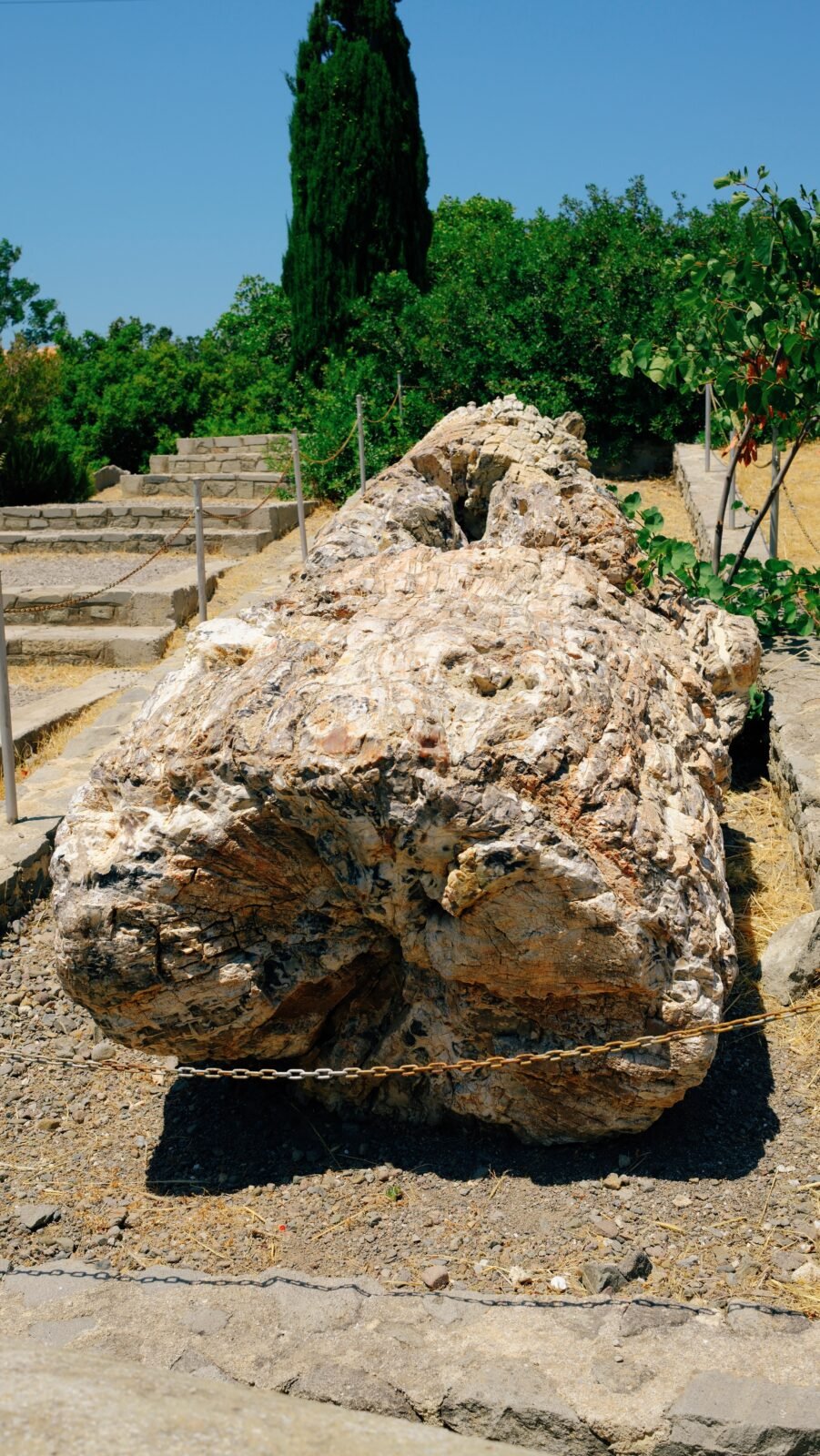
Sigri is a low-key little town built around one big draw: the Natural History Museum of the Petrified Forest. Given how far it sits from everything else, I’d only plan the detour if the museum is on your list. If it is, though, you’re in luck — the roads getting there are smooth and well maintained. The museum itself sounds drier than it is; watching how the trees fossilized into something almost crystalline is oddly captivating.
Meanwhile, back in town, Calma Bar is a solid lunch stop for good wraps, omelets, pancakes and coffee. Besides that, there are fish restaurants nearby if you want something more substantial, plus a beach for afterward. Park at the museum and walk the short stretch into town.
7. Skala Kalloni: A Quiet Corner Among Lesvos’ Charming Villages
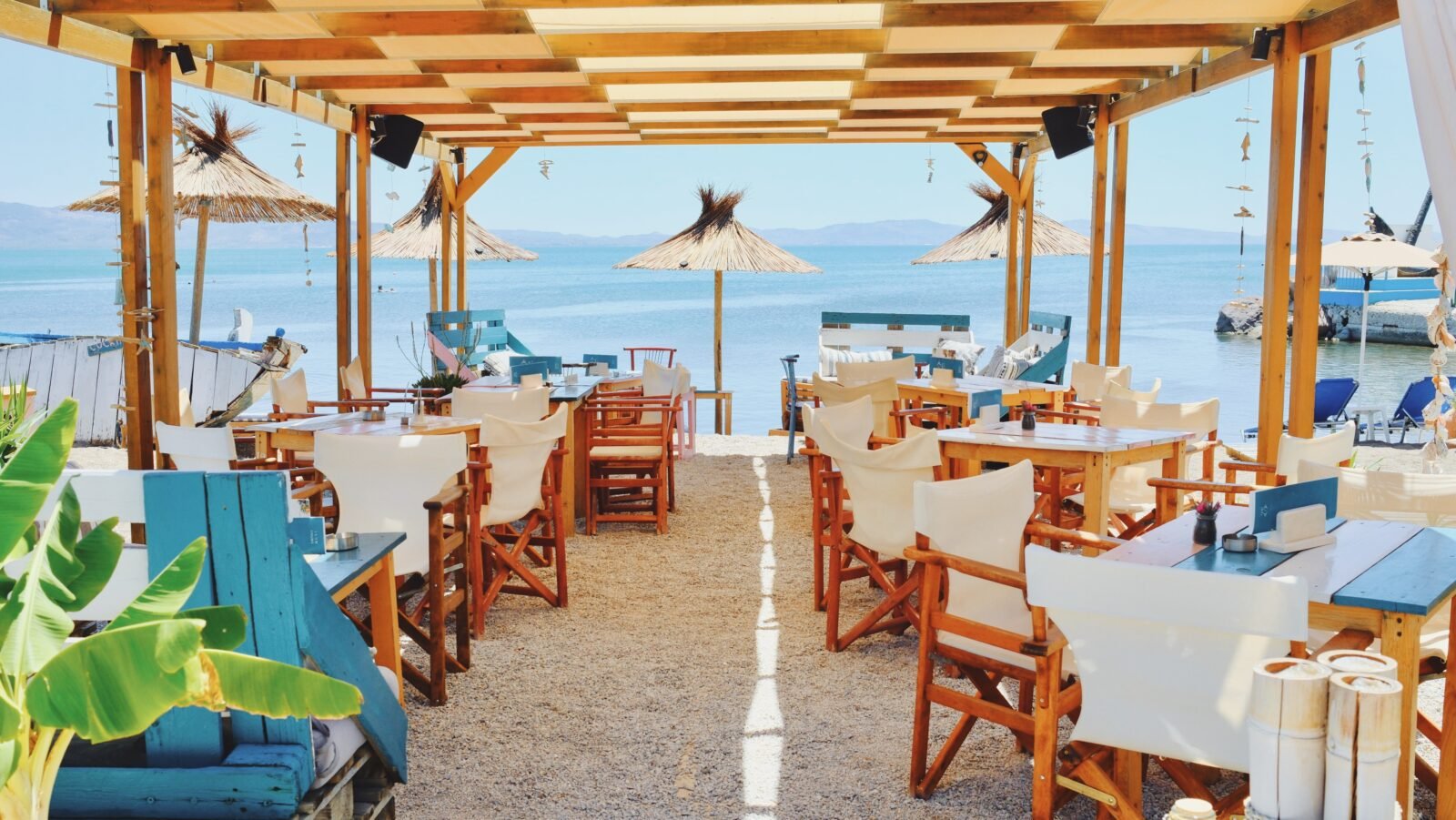
Skala Kalloni brings together a beach, street art and a handful of restaurants, with noticeably fewer tourists than elsewhere. Even in the thick of high season, it felt calm and unhurried. A promenade runs along the water, lined with restaurants, murals and a harbor full of fishing boats. Order food at several of the beachfront spots, and you’ll score a free sunbed for the day — a nice perk if you’re settling in for a while. Finally, the beach itself slopes in gently, which is ideal if you’re wading in slowly or keeping an eye on kids.
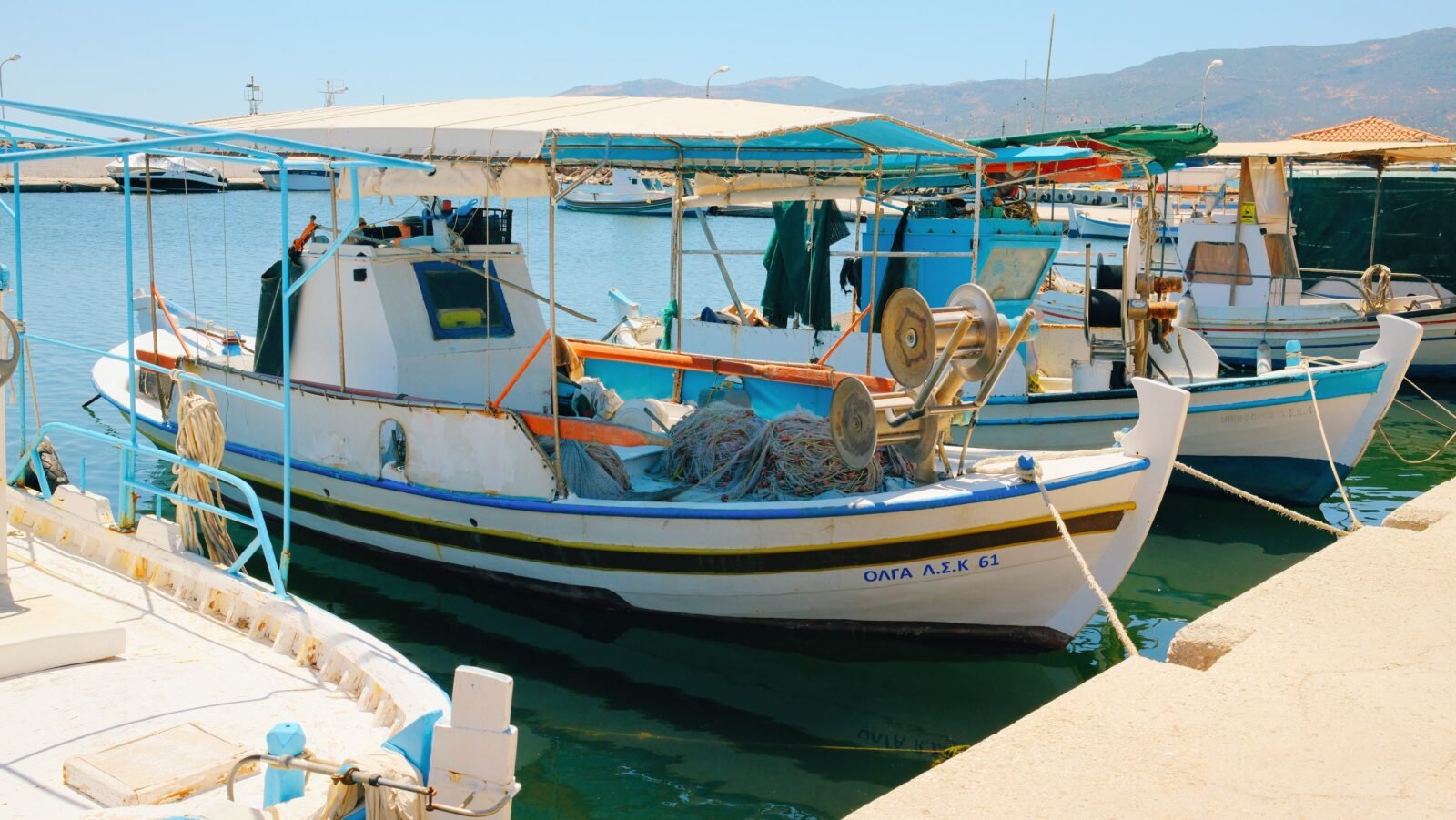
Above all, the street art along the promenade is worth slowing down for. Local artists have covered several walls with colorful murals — easy to miss if you’re moving quickly, but worth a proper look on foot. Between the murals, the boats coming and going, and the relaxed pace of the restaurants, it’s an easy place to lose an hour or two without really trying.
Good to know
Order food at one of the beachfront restaurants and the sunbeds are yours for the day — an easy way to turn lunch into a half-day at the beach.
Final Thoughts: Why These Charming Villages Are Worth the Trip
If you’re figuring out what to do in Lesvos beyond the beaches, these charming villages in Lesvos are a great place to start. That said, give yourself enough time between stops: one or two villages a day is plenty once you factor in meals and long lunches. Between the ceramics in Mantamados and the ouzo and olive oil in Plomari, there’s plenty to keep you busy. And thanks to the quiet harbors at Skala Sikamineas and Skala Kalloni, you’ll come away with a much better sense of what makes this island different from the rest of Greece.
Unique Things to Do in Plomari, Lesvos: Ouzo Museum and Olive Oil Tasting
Complete Travel Guide to Lesvos, Greece
Your Complete Travel Guide to Lesvos, Greece Lesvos is one of the largest Greek islands, yet it feels surprisingly untouched, which is exactly why we…
Molyvos: Where to Eat and Drink

Driving in Lesvos: A First-Hand Guide to Roads, Routes and Car Rentals
Frequently Asked Questions About Visiting These Villages
Do you need a rental car to visit these villages in Lesvos?
Yes — a rental car is highly recommended. These villages are spread across the island, and there’s no practical way to reach places like Sigri or Agiasos without your own wheels.
For tips on renting a car and getting around, see my Complete guide to Lesvos.
How many days do you need to see these villages?
We’d suggest at least four to five days if you want to see all seven without rushing. Preferably one or two villages a day, with time left over for the beaches and ouzo tastings.
Which village is the best base for exploring Lesvos?
We based ourselves in Molyvos and would happily do it again. Molyvos is central to the north coast and has plenty of restaurants and places to stay.